

How does a belt pulley work?

As a belt pulley supplier, I've had the privilege of witnessing firsthand the crucial role these simple yet ingenious devices play in countless mechanical systems. Belt pulleys are fundamental components in power transmission, and understanding how they work is essential for anyone involved in engineering, manufacturing, or even just curious about the inner workings of machinery.
Basic Structure of a Belt Pulley
A belt pulley is essentially a wheel with a grooved rim around its circumference. These grooves are designed to hold a belt, which can be a flat belt, V - belt, or a timing belt, depending on the application. The pulley is typically mounted on a shaft, and it can either be the driving pulley (connected to a power source like an electric motor) or the driven pulley (connected to the machinery that needs to be powered).
The material of the belt pulley can vary widely. Common materials include cast iron, steel, aluminum, and even plastics. Cast iron pulleys are known for their high strength and durability, making them suitable for heavy - duty applications. Steel pulleys offer a good balance between strength and cost, while aluminum pulleys are lightweight, which is beneficial in applications where weight reduction is crucial, such as in some automotive and aerospace systems. Plastic pulleys are often used in low - load applications where corrosion resistance and quiet operation are desired.
Principle of Operation
The basic principle behind a belt pulley system is the transfer of rotational motion and power from one shaft to another through the use of a belt. When the driving pulley rotates, it causes the belt to move. The friction between the belt and the pulley's grooved surface ensures that the belt grips the pulley firmly, preventing slippage (in an ideal situation). As the belt moves, it transfers the motion to the driven pulley, causing it to rotate.
The ratio of the diameters of the driving and driven pulleys determines the speed and torque relationship between the two shafts. If the driving pulley has a larger diameter than the driven pulley, the driven pulley will rotate at a higher speed than the driving pulley, but with lower torque. Conversely, if the driven pulley has a larger diameter, it will rotate at a lower speed but with higher torque. This principle is used in many applications, such as in automotive transmissions and industrial machinery, to achieve the desired speed and torque output.
Types of Belt Pulleys and Their Applications
V - Belt Pulleys
V - belt pulleys are one of the most commonly used types of belt pulleys. They have a V - shaped groove that matches the cross - section of a V - belt. The V - shape provides a greater contact area between the belt and the pulley, which increases the frictional force and allows for higher power transmission compared to flat belts. V - belt pulleys are widely used in industrial machinery, such as conveyor systems, pumps, and compressors. For instance, in a conveyor system, the V - belt pulley on the motor shaft drives the belt, which then moves the conveyor belt, transporting goods from one place to another.
Timing Belt Pulleys
Timing belt pulleys, also known as toothed belt pulleys, have teeth on their circumference that mesh with the teeth on a timing belt. This positive engagement ensures that there is no slippage between the pulley and the belt, making them ideal for applications where precise synchronization of rotation is required, such as in the camshaft and crankshaft of an internal combustion engine. In a car engine, the timing belt connects the crankshaft to the camshaft, ensuring that the valves open and close at the correct time relative to the movement of the pistons.
Flat Belt Pulleys
Flat belt pulleys have a flat surface around their rim. Flat belts are often used in applications where low - cost and high - speed transmission are required. They are commonly used in textile machinery, woodworking equipment, and some older industrial machines. The flat surface of the pulley allows the belt to run smoothly, and the simplicity of the design makes it easy to install and maintain.
Components Associated with Belt Pulleys
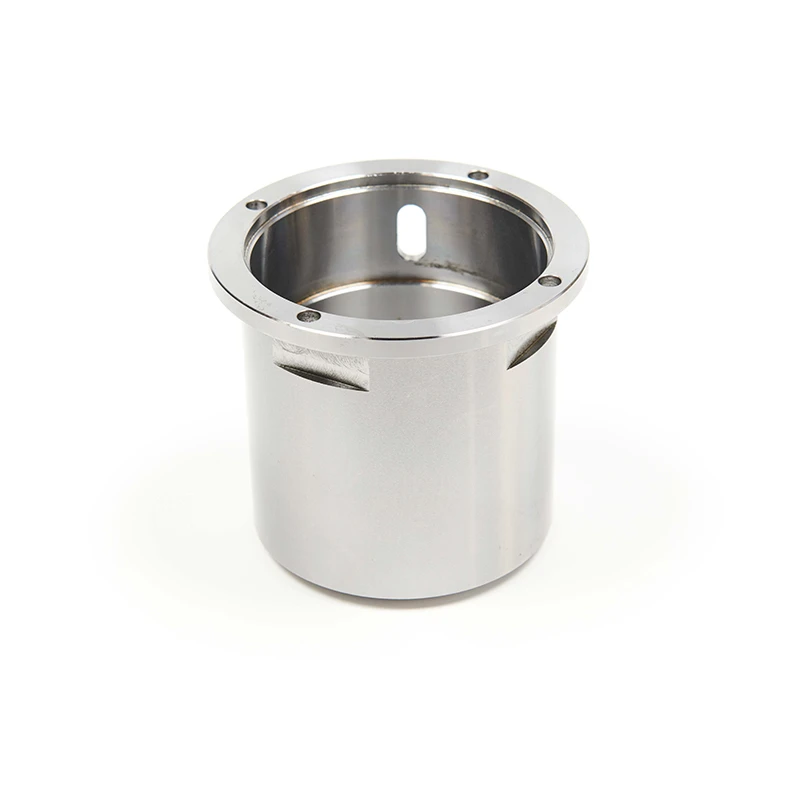
In addition to the belt pulleys themselves, there are several other components that are often used in conjunction with them. For example, Shaft Sleeve is a cylindrical component that is used to protect the shaft and provide a smooth surface for the pulley to rotate on. It can also be used to adjust the position of the pulley on the shaft.
Sprocket is another important component. Spacers are used to maintain the correct distance between pulleys on a shaft, ensuring proper belt tension and alignment. They are available in different materials and sizes to suit various applications.
In some cases, steering systems may also use belt pulleys. Steering Wheel Motor Accessories can include belt pulleys that are part of the power steering mechanism. These pulleys help in transferring the power from the motor to the steering system, making it easier to turn the steering wheel.
Maintenance and Troubleshooting
Proper maintenance of belt pulley systems is crucial to ensure their efficient and reliable operation. One of the most important aspects of maintenance is belt tension adjustment. If the belt is too loose, it may slip, resulting in reduced power transmission and increased wear on the belt and pulleys. On the other hand, if the belt is too tight, it can put excessive stress on the bearings and shafts, leading to premature failure.
Regular inspection of the belt and pulleys is also necessary. Look for signs of wear, such as cracks, fraying, or glazing on the belt, and signs of damage or excessive wear on the pulleys, such as worn - out grooves. Replace any worn or damaged components as soon as possible to prevent further damage to the system.
If you encounter problems with your belt pulley system, such as noise, vibration, or reduced power transmission, it's important to troubleshoot the issue. Check the belt tension, alignment of the pulleys, and the condition of the bearings. In some cases, the problem may be due to a misaligned pulley or a worn - out bearing, which can be easily fixed by realigning the pulley or replacing the bearing.
Conclusion
Belt pulleys are simple yet incredibly important components in mechanical systems. Their ability to transfer power and motion efficiently and reliably makes them indispensable in a wide range of applications, from industrial machinery to automotive engines. As a belt pulley supplier, I understand the importance of providing high - quality pulleys and associated components to meet the diverse needs of our customers.
If you are in the market for belt pulleys or any related accessories, we would be more than happy to assist you. Our team of experts can provide you with professional advice on the selection, installation, and maintenance of belt pulley systems. Whether you need a small pulley for a DIY project or a large - scale industrial solution, we have the products and expertise to meet your requirements. Contact us today to start a procurement discussion and find the perfect belt pulley solution for your needs.
References
- Norton, R. L. (2004). Machine Design: An Integrated Approach. Pearson Prentice Hall.
- Shigley, J. E., & Mischke, C. R. (2001). Mechanical Engineering Design. McGraw - Hill.