

Large-scale Machining
Your Professional Large-scale Machining Supplier
Zhangjiagang Xinshuo Machinery Co., Ltd. was established in December 2012. The company is located in Zhangjiagang, Suzhou, a national health city. It is a CNC enterprise integrating R&D, production, sales and service. The company invested in the establishment of a mechanical parts processing factory in October 2015. The existing factory building is 5,400 square meters and has more than 30 sets of equipment from well-known manufacturers in South Korea, Taiwan, and China.


Why Choose Us
Our Certificate
We Obtained 11 utility model patent certificates.
Production Equipment
We CNC lathes, vertical machining machines, horizontal machining machines, gantry machines, boring machines, etc.
Rich Experience
We are committed to the mechanical parts processing market and provide well-known CNC equipment manufacturers and automation companies in South Korea, China and other countries.
After-Sale Service
Professional and thoughtful after -sales team, let you worry about us after -sales Intimate service, strong after -sales team support.
Large-scale Machining
Advantages of Laser Cutting Machine
High Material Compatibility
Laser Cutters are able to cut a wide variety of materials. The list below categorizes many–but not all– of the machine’s compatible mediums.
Automation
Although an experienced machine operator plays a large part in the resulting quality of a piece, the majority of the laser process is completely automated. The machines need very little manpower because of their highly advanced technology. So all the workers must do is move materials.
Precision: One of the Key Advantages of Laser Cutters
Accuracy is arguably one of the main motivators for using laser cutters in the first place, as this is oftentimes their most well-known advantage. Most machines are accurate to +/– 0.1 mm, and with high standards like these, there is little need for after-treatment or fixes to the finished products.
Energy Efficiency
Energy Efficiency is all about achieving perfect results while using as little energy as possible. It should be the main focus of any business, as it is the most cost-effective way to save money, reduce environmentally toxic emissions, and meet energy demands.
Repeatability
The precision of laser cutters leads us to another similar advantage, repeatability. A standard machine is exact to +/– 0.05mm on most materials. This ensures that each part, project, or product cut on the machine is identical to maximal levels of precision. Repeatability is essential in almost any manufacturing process, identical parts are needed in many scenarios to please customers or even ensure safety.
Ability to Cut Complex Shapes
As you can see from the photos above displaying compatible materials, laser cutters are capable of cutting extremely complex shapes with unbelievable precision. There is little you cannot cut with these machines, with the only exception being designs on a minuscule scale that are too small for the focal spot size of the laser.
Benefits of Bending Machines

-
Precision
Bending machines are designed to create precise bends, making them perfect for industries that require accuracy.
-
Time-saving
Manual bending is a time-consuming process that can take hours to complete. Bending machines can reduce the time required to create a bend significantly.
-
Versatility
Bending machines can handle various sizes and thicknesses of metal sheets and pipes, making them versatile tools in various industries.
-
Consistency
Bending machines can create consistent bends every time, ensuring that the final product meets the required specifications.
Product Paramenters
|
Power |
2000 watts 3000 watts 4000 watts 6000 watts |
|
Work area |
3000*1500mm |
|
X-axis travel |
1530mm |
|
Y-axis travel |
3050mm |
|
Z-axis travel |
100mm |
|
X/Y-axis positioning accuracy |
±0.05mm |
|
X/Y-axis repeated positioning accuracy |
±0.02mm |
|
Maximum speed |
100m/min |
|
Maximum acceleration |
1G |
|
Workbench maximum load |
700KG |
|
Dimensions (length x width x height) |
4360*2760*1800mm |
|
Phase |
Three-phase |
|
Power supply rated voltage |
380V |
|
Frequency |
50Hz |
|
Total power supply protection level |
IP54 |
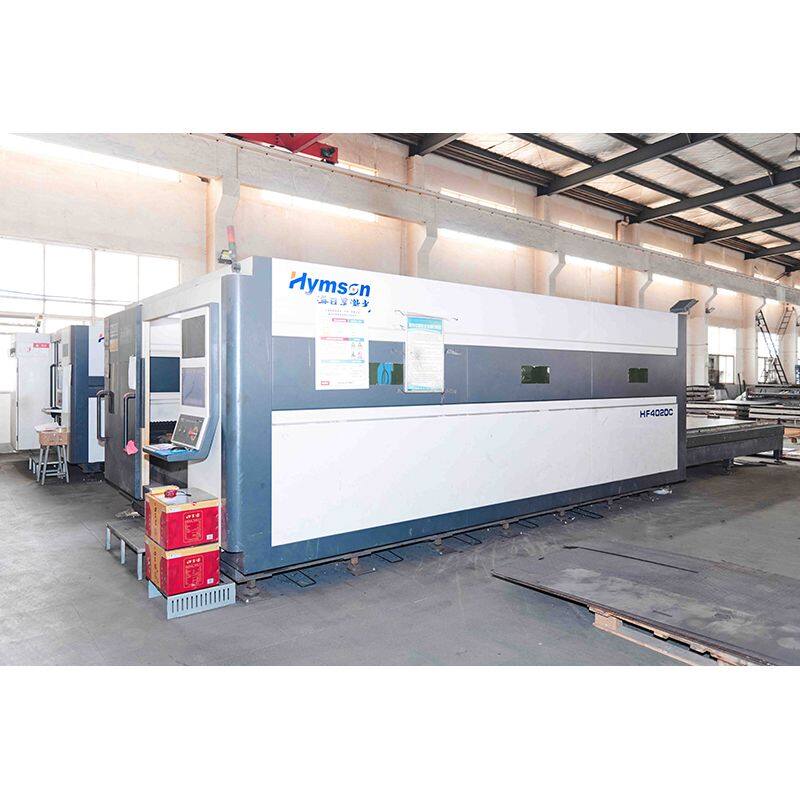
Main Components of a Laser Cutting Machine
Laser Resonator: Generates the laser beam necessary for cutting by stimulating emission of radiation.
Beam Delivery System: Transports the laser beam from the resonator to the cutting head with precision.
Focusing Lens: Focuses the laser beam to a small, intense spot size for precise cutting.
Cutting Head: Houses the focusing lens and nozzle, directing the laser beam onto the material surface.
Nozzle: Releases assist gases, such as oxygen or nitrogen, to aid in the cutting process.
Motion Control System: Guides the cutting head and ensures precise movement along programmed paths.
Workpiece Bed: Supports the material being cut and provides stability during the cutting operation.
Controller: Manages the operation of the entire cutting process, including beam intensity and speed.
Assist Gas System: Supplies and controls the flow of assist gases to optimize cutting efficiency.
Cooling System: Maintains optimal operating temperatures for laser components to ensure longevity and efficiency.
The Parts Of The Bending Machine
Body: Constructed from high-strength steel plates welded together, providing excellent stability and rigidity, serving as the primary support structure for the bending machine.
Worktable: Supports the metal sheets during processing, typically equipped with feeding devices and fixtures to ensure accurate positioning and stability of the sheets during bending.
Dies: The critical components responsible for bending the metal sheets, comprising the upper and lower dies. The upper die is mounted on the mechanical arm, while the lower die is fixed to the body. Both are often made of high-hardness materials to ensure precision and stability during bending.
Hydraulic System: Acts as the power source for the bending machine, driving the up-and-down movement of the mechanical arm through hydraulic oil, applying force to achieve the bending of metal sheets. The design and performance of the hydraulic system directly affect the efficiency and processing quality of the bending machine.
Electrical System: Controls the operation and parameter settings of the bending machine, including control panels, sensors, etc., used to monitor and adjust various parameters during bending to ensure processing accuracy and stability.
Operating Steps
Preparation
Ensure the workspace is clean and free of obstructions. Inspect all components of the bending machine, especially the dies and clamps, for proper condition.
01
Install Dies
Select the die suitable for the required bend angle and tube diameter. Mount the die onto the machine’s worktable and secure it firmly.
02
Secure the Workpiece
Position the tube onto the die. Use clamps to hold it in place, ensuring it will not shift during bending.
03
Adjust Angle
Set the machine to the desired bend angle. Start the machine and gradually apply pressure until the target angle is reached.
04
Check and Adjust
Release pressure and remove the tube. Measure the bend angle to ensure it meets requirements. If adjustments are needed, fine-tune and repeat the process.
05
Applications of Laser Cutting Machine
Automotive Industry
Used for cutting intricate parts from sheet metal, such as chassis components and interior panels.
Electronics
Precision cutting of circuit boards and microcomponents from various materials like plastics and metals.
Aerospace
Critical for manufacturing lightweight, high-strength components including turbine blades and fuselage panels.
Medical Devices
Laser-cut components for surgical instruments and medical implants, ensuring precision and biocompatibility.
Architectural Models
Cutting detailed models and prototypes from acrylic or wood for architectural firms and urban planners.
Textile Industry
Fabric cutting for intricate patterns and designs, enhancing productivity in garment manufacturing.
Bending Machine Used For
Metal Product Processing
Such as frames and brackets for steel structures, electrical cabinets, chassis cabinets, storage cabinets, tool cabinets, and safes.
Door and Window and Railing Manufacturing
Providing precise bending processing for door and window frames, metal railings, etc.
Home Appliance Shell Components
Using CNC bending technology to ensure high-precision processing of metal shells and core components for appliances such as washing machines, refrigerators, televisions, and mobile phone metal backplanes, enhancing product durability and design.
Automotive Manufacturing
Bending metal sheets into shapes for automotive body parts to facilitate installation and usage.
Construction Industry
Components such as stairs, window frames, and doors and windows need to be processed into shape using CNC bending machines.
Mechanical Processing
After bending machine processing, mechanical parts such as metal lathes and locks have improved functionality.
FAQ
As one of the leading large-scale machining manufacturers and suppliers in China, we warmly welcome you to buy large-scale machining made in China here from our factory. All customized products are with high quality and competitive price. Contact us for quotation.
quality large scale machining, large scale machining of turbines, adaptable large scale machining