


Why Choose Us
Rich Experience
We are committed to the mechanical parts processing market and provide well-known CNC equipment manufacturers and automation companies in South Korea, China and other countries.
Customized Service
Conduct product accuracy analysis based on the drawings provided by the customer, and communicate with the customer about the drawing requirements and product process.
Advanced Equipment
The existing factory building is 5,400 square meters and has more than 30 sets of equipment from well-known manufacturers in South Korea, Taiwan, and China.
After-Sale Service
Professional and thoughtful after -sales team, let you worry about us after -sales Intimate service, strong after -sales team support.
What is Bending Machine
A bending machine is suitable for bending sheet metal and shaping workpieces in sheet metal fabrication. There are many types and functions of bending machines, which can either serve as a press or a bending machine.
Some bending machines can process sheet metal directly without the need for clamping tools, while others require clamping tools to assist with bending.
The metal sheet is secured by the clamping device and remains in place throughout the entire processing process. The bending machines can also use the bending tool to shape the metal plate and create the desired profile.
The body and tools of the bending machine must be made of special materials to ensure that they can withstand the pressure applied during processing without being damaged.
The following is a comprehensive guide to metal bending machines, which covers different types of bending machines and provides detailed operating steps and precautions, specific functions and applications of pipe bending machines, metal sheet bending machines, plate rolling machines, and press brakes.
Related Product

This product is mainly CNC vertical machining accessories and saddle integrated (HT300) castings. The main process route is casting gantry machining boring machine machining precision grinding surface spraying (paint)

This product has a digital control pipe cutting machine base, which is mainly processed after welding. The process route includes raw materials - welding - tempering - sandblasting - processing - surface treatment (paint).
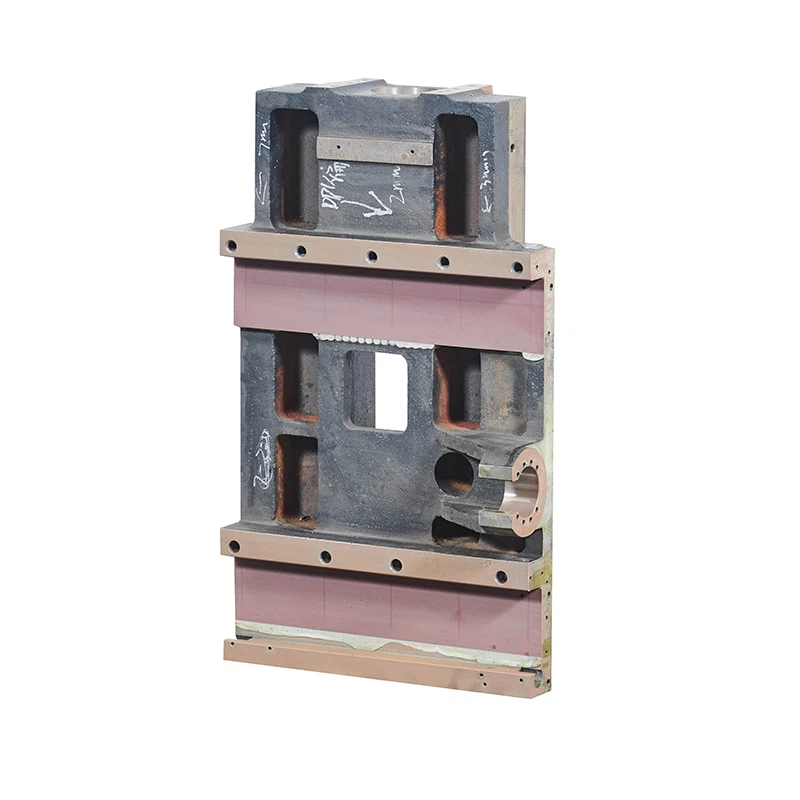
This product is mainly a CNC horizontal CNC lathe saddle accessory and a base integrated (HT300) casting. The main process route is casting vertical machining horizontal machining center machining hard rail surface quenching precision grinding surface spraying (paint).

Confidentiality system (taking confidentiality and security measures for your drawings and personal information)
-Measurement equipment (complete mechanical processing equipment)
-Price advantage (more affordable compared to accessories of the same level)

Precision Pipe Cutting Machine Base
This product has a digital control precision pipe cutting machine base, which is mainly processed after welding. The process route includes raw materials - welding - tempering - sandblasting - processing - surface treatment (paint).

Please convert the 3D file to universal formats such as STP, IGS, X-T, etc. before sending it to us.
Please indicate the tolerance requirements on the 2D drawing, and in special cases, please provide us with detailed explanations.
Please tell us your product material requirements.

The internal equipment is mainly used for rough and precision machining, boring, and milling of machined parts
Mainly processing structural components, castings, aluminum parts, and large machined parts
The accuracy can be controlled between 0.01mm~0.05mm.
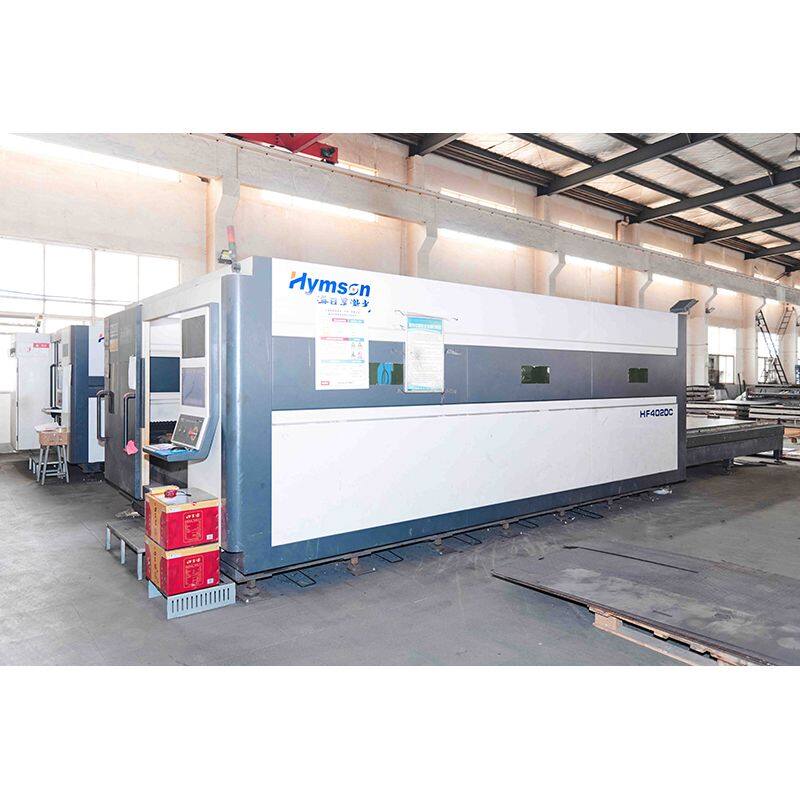
A laser cutter is a machine that uses a high-energy focused laser beam to cut into various plate or sheet materials to create 2-dimensional parts for both hobbyist and industrial applications. Typical materials include wood, steel, and some plastics.
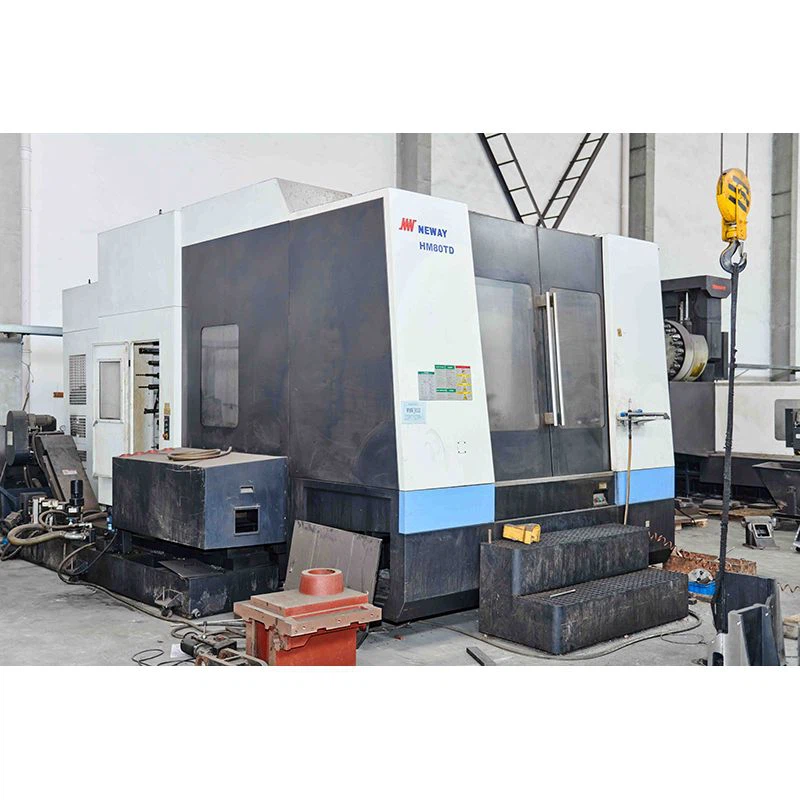
The internal equipment is mainly used for final rough and precision machining of machined parts, with a turntable of 1 degree and 1 minute, and boring holes
Mainly processing structural components, castings, special-shaped parts, 45 steel.
Advantages of Bending Machine
Increased Efficiency: Bending machines can handle repetitive tasks with speed and precision. Simply put, it improves production efficiency.
Cost-effective Solution: By automating the bending process, companies can reduce labor costs and minimize material wastage.
Ersatility: These machines are designed to work with a wide range of materials, such as sheet metal, pipes, tubes, and plates.
Consistent Results: Bending machines have precise control over bends and angles. So they can ensure consistent quality in every piece they produce.
Improved Safety Measures: Bending operators have minimal direct contact with hazardous processes like sharp edges or high-pressure systems.
What Are the Functions of a Bending Machine?
A bending machine is basically a forging machinery that plays a key role in sheet metal processing, especially for large sheets. Its functions range from bending and stretching to rounding and punching metals. So you can imagine the possibilities it offers across industries- light industry, aviation, shipbuilding, metallurgy, instrumentation, and more!
The workbench, made up of a base and pressure plate, sits on the bracket. The base connects to the clamping plate through a hinge mechanism. Within the base, you'll find essential parts like seat shell housing and coil structure that are covered with protective plates.
All these elements make sure that when metals are placed between them for bending purposes, they can be securely held in place while receiving force from the machine. When the wire is connected to the coil, it creates an attractive force on the pressure plate. This forces the thin plate to be clamped between the pressure plate and the base.
Because the system uses electromagnetic force binding, the pressure plate can be shaped to fit a variety of workpiece needs. It can also process pieces that have side walls. You can replace the bending machine mold and can meet your diverse demands.
What Are the Main Components and Structure of the Bending Machine?
Bend die
The bend die is also known as the bend form or radius die. It's a major part of rotary-draw bending machines. The bend die shapes the tube during the drawing process to achieve the desired bend. You must choose the right type of bend die as it directly affects how well the tubes conform to specific radii.
If you're working with pipe bending applications that require tight bends with small radii, selecting a suitable high-quality bend die becomes even more important.
Clamp die
The clamp die is responsible for pressing the tube onto the bend die. So it ensures that there is no slipping during operation. This particular part provides stability and accuracy to achieve precise bends in metal tubes or pipes.
Suppose you are utilizing a pipe bending machine to make delicate forms or angles on a stainless steel pipe. The clamp die binds it tightly to the bend die to avoid any movement that may result in mistakes.
Pressure die
The primary function of a pressure die is to ensure that the tube or sheet metal accurately follows the bend die's contour. This specific part applies consistent and even pressure throughout the bending operation, resulting in precise bends. Think of it as a guiding hand that ensures uniformity and accuracy in each bend.
Wiper die
A wiper die is positioned right after the bend die, and it primarily prevents the formation of humps in the inner radius.
During the bending process, the material becomes plastic and starts to deform. That creates wrinkles and larger deformations. However, by incorporating a wiper die after the bend die, these issues can be effectively dealt with.
Mandrel
For bending steel and aluminum tubes, the mandrel helps achieve satisfactory results. Its primary objective is to keep the tube from collapsing during bending, ensuring precise and consistent bends every time.
What Are the Different Types of Bending Machines?
A pipe bending machine is a valuable tool used for shaping metal pipes and profiles into different shapes. Typically, these machines are designed to work with square or rectangular profiles made of thick metals.
The process involves stretching the material using friction between the pipes and the bending tools. Pipe benders also perform operations like swaging, flaring, and crimping. To ensure smooth bending, drawing oil can be applied between the pipes and the tools. That'll reduce friction and prolong the life of both.
It's capable of handling different materials such as stainless steel, iron, copper, aluminum, titanium, and carbon steel. With this machine, you receive uniform curves without worrying about external collapses or internal folds. Pipe benders find extensive use in construction projects like buildings, highways, railways, bridges, etc.
It's an incredibly versatile tool that's used to shape sheet metal into specific profiles. When using this machine, the metal sheet is placed on the lower die of the workbench and pressed by punches. The power system drives the movement of the slider, causing the punch to move downwards. That results in precise bends!
This type of machine can bend not only metal sheets but also pipes at any desired angle. Sheet metal bending machines are ideal for processing larger workpieces that may be too challenging for other machines to handle. The clamping shaft securely holds each workpiece in place. At the same time, folding arms swing in an arc motion to achieve perfect flange angles.
The pyramid-type mechanical marvel called the plate rolling machine is designed for bending and forming metal plates. It's equipped with a motor and gear system, and the bottom roller powers its rotation. Meanwhile, the upper roller can be manually adjusted up and down to achieve the desired bending radius.
One notable feature of the steel plate bending machine is its double-sided pre-clamping device. It's a unique structure that allows both bottom rollers to clamp the workpiece securely in place. Also, there are hydraulic cylinders that lock down the upper roller firmly via these two lower rollers.
When it comes to bending metal plates, the press brake is the go-to machine. It offers accuracy and speed while processing workpieces in bulk. You can find different types of press brakes available, and they are usually powered by hydraulic or mechanical systems.
The secret behind the precision lies within the three shafts of its rear gauge. They provide control over stroke length and bending angle. So whether you need precise bends for automotive parts or intricate shapes for architectural elements, a press brake can handle it all with ease.
A mechanical bending machine allows for precision customization according to your specifications. That's because it does not use stationary dies like traditional bending machines.
The accuracy of a mechanical bending machine relies on factors such as material properties and the degree of bend required. With different types available, let's explore two popular options:
• Sheet Metal Bending Machine: This type bends sheet metal based on radial length and width limitations determined by its length (L). Some models even have automated features that can calculate reduction amounts and pre-bend lower roll lengths.
• Hydraulic Press Brake: It utilizes hydraulic systems for upper die movement. Hydraulic press brakes save time and labor while offering versatility across various applications. Enjoy easy operation with safety measures like fully guarded footswitches!
The hydraulic bending machine consists of a workbench, support, clamping plate, and pressure plate. The clamping action can be controlled manually or automatically using a foot pedal. Inside the machine's base, there is a movable coil. The coil is energized by a wire attached to a hydraulic cylinder.
One of the advantages of using this type of bending machine is its flexibility and portability. It offers cost-effective solutions compared to conventional machines while easily handling both small and large pipes. In industries like automotive, chemical production, and more – where precision bending plays an important role – hydraulic bending machines are highly sought after for their versatility.
Another variation, known as the hydraulic press brake, utilizes mechanical blocks operated by hydraulics instead of coils. It ensures effortless bends in metal parts.
9 Factors to Consider When Selecting a Bending Machine

Bend accuracy
Evaluate the machine's ability to achieve precise bend angles and lengths for accurate part production. You can order sample products from the manufacturer.
Material ductility
Select a machine suitable for the material's ductility to ease the bending process.
Number of tool stacks
Always select a machine with multiple tool stacks for increased flexibility and efficiency.
Production volume
Consider the machine's throughput and efficiency to meet production demands effectively.
Automation and control
Assess the level of automation and control features for optimized operation and reduced setup time. However, higher automation levels also increase the upfront cost of the machine.
Maintenance and support
Look into the machine's maintenance requirements and the availability of support services to ensure smooth operation over time.
Warranty specifics
Check the manufacturer's warranty for coverage of essential components and common issues, ensuring peace of mind and investment protection. Inquire about the accidental damage policy during shipping.
Shipping costs
Consider shipping expenses, especially for overseas purchases. Compare options and factor in additional fees to determine the total cost.
After-sales services
Evaluate the manufacturer's reputation for helping with technical issues, having spare parts, and doing maintenance. Good support reduces downtime and makes the machine last longer.
Timely cleaning and equipment maintenance are necessary for the longevity of your machine. Here are a few simple steps you can take to keep your pipe bending machine in pristine condition.
Stay within the operating parameters
A pipe bender is designed to deal with small-diameter items. Trying to bend pipes that exceed the machine's parameters will lead to premature wear and potentially cause serious damage.
Regularly oil your machine
Lubrication is critical for reducing friction and preventing wear on moving parts. Follow the manufacturer's recommendations for lubricating the machine's components, including the bending mechanism, punch piston, rollers, and hydraulic system.
Keep your bending machine clean
Over time, dust and small metal bits can accumulate inside your machine. This problem accelerates when working on a factory floor with many other metal processing equipment like metal sheet & tube-integrated laser cutting machines. Use compressed air or a vacuum to remove larger bits and wipe down surfaces with a damp cloth for dust.
Keeping the machine clean also prevents corrosion and ensures smooth operation.
Check for tool wear
Inspect the bending tools, such as dies, punches, and mandrels, for signs of wear or damage. Replace worn-out or damaged tools promptly to maintain bending accuracy and prevent defects in the finished parts.
Inspect hydraulic system
An optional maintenance factor is hydraulic system upkeep. If your bending machine is hydraulic-driven, regularly inspect the hydraulic system for leaks, damaged hoses, or worn seals. Check hydraulic fluid levels and condition, and replace or top up fluid as necessary.
Our Factory
Zhangjiagang Xinshuo Machinery Co., Ltd. was established in December 2012. The company is located in Zhangjiagang, Suzhou, a national health city. It is a CNC enterprise integrating R&D, production, sales and service. After years of development, we have an experienced team Our high-level professional technical team owns many high-end brand products from Europe, America, Japan, Korea and Taiwan, and is able to provide our customers with high-quality CNC processing solutions. We are committed to the mechanical parts processing market and provide well-known CNC equipment manufacturers and automation companies in South Korea, China and other countries. Provide precision parts processing and manufacturing.
Xinshuo Machinery is committed to creating maximum value for customers and continuing to innovate. It adheres to the business principle of centering on the core needs of customers and the business philosophy of professionalism, innovation, co-creation and sharing, uses numbers to quantify value, and builds a benchmark in the CNC industry.

FAQ


