

In the realm of modern machining, Computer Numerical Control (CNC) lathes stand as the cornerstone of precision manufacturing. At the heart of a CNC lathe lies a crucial component - the CNC Lathe Saddle. As a trusted supplier of CNC Lathe Saddle, I've witnessed firsthand how this seemingly unassuming part can significantly influence machining accuracy. In this blog post, I'll delve into the various ways in which a CNC lathe saddle affects the precision of machining operations.
1. Structural Rigidity and Stability
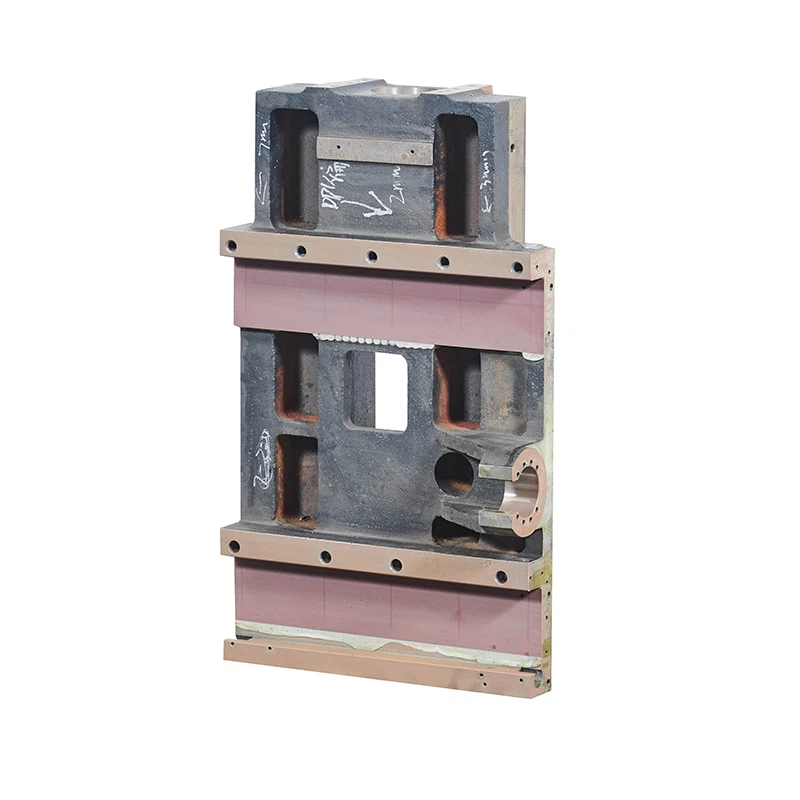
One of the primary factors that determine the machining accuracy of a CNC lathe is the structural rigidity and stability of its components. The saddle, which houses the cross - slide and the tool post, plays a pivotal role in providing a stable platform for the cutting tools. A well - designed and properly manufactured saddle is constructed from high - quality materials, such as cast iron or steel, which possess excellent stiffness properties.
When the saddle is rigid, it can effectively resist the cutting forces generated during machining. For instance, during heavy turning operations where large depths of cut are taken, the cutting forces can be substantial. If the saddle lacks rigidity, it may deform under these forces, leading to inaccurate machining. The deformation can cause the tool to deviate from its intended path, resulting in dimensional errors in the workpiece.
Moreover, a stable saddle minimizes vibrations. Vibrations can have a detrimental effect on machining accuracy, as they cause the cutting tool to chatter. Chattering leads to uneven surface finishes and can also cause premature tool wear. By providing a stable base, the saddle helps to dampen vibrations and ensure smooth cutting operations. This is particularly important when machining materials that are prone to vibration, such as long and slender workpieces.
2. Guideway Design and Precision
The guideways on the saddle are another critical aspect that affects machining accuracy. Guideways are the surfaces along which the saddle moves on the lathe bed. There are different types of guideways, including flat guideways, V - shaped guideways, and box - type guideways, each with its own advantages and disadvantages.
Precision - ground guideways are essential for accurate movement of the saddle. The quality of the guideway surface finish and its geometric accuracy directly impact the positioning accuracy of the saddle. For example, if the guideways are not perfectly straight, the saddle may deviate from its intended path as it moves along the lathe bed. This can result in errors in the X - axis positioning of the cutting tool, which is crucial for achieving the desired diameter and length dimensions of the workpiece.
In addition, the lubrication of the guideways is also important. Proper lubrication reduces friction between the saddle and the guideways, allowing for smooth and precise movement. Insufficient lubrication can cause increased wear on the guideways, leading to a decrease in their accuracy over time. Regular maintenance and inspection of the guideways are necessary to ensure their continued precision.
3. Movement Control and Feedback
The movement of the saddle is controlled by the CNC system of the lathe. The accuracy of the movement control is directly related to the machining accuracy. The CNC system sends commands to the servo motors that drive the saddle along the guideways. These commands are based on the programmed tool path.
High - quality servo motors and ball screws are often used to drive the saddle. Servo motors provide precise control over the movement of the saddle, allowing it to move to the exact position required by the machining program. Ball screws are used to convert the rotational motion of the servo motor into linear motion of the saddle. Their high efficiency and low backlash ensure accurate and repeatable movement.

Feedback devices, such as linear encoders, are also crucial for maintaining machining accuracy. Linear encoders provide real - time feedback to the CNC system about the actual position of the saddle. If there is any deviation between the commanded position and the actual position, the CNC system can make corrections to ensure that the saddle moves to the correct position. This closed - loop control system helps to minimize errors and improve the overall accuracy of the machining process.
4. Thermal Effects
Thermal effects can have a significant impact on the machining accuracy of a CNC lathe, and the saddle is not immune to these effects. During machining, heat is generated due to the friction between the cutting tool and the workpiece, as well as the operation of the servo motors and other components.
The saddle can absorb and transfer heat, which can cause it to expand. Thermal expansion can lead to changes in the dimensions and shape of the saddle, which in turn can affect the positioning of the cutting tool. For example, if the saddle expands unevenly, it can cause misalignment of the tool post, resulting in dimensional errors in the workpiece.
To mitigate thermal effects, modern CNC lathes often incorporate thermal compensation systems. These systems use sensors to monitor the temperature of the saddle and other critical components. Based on the temperature readings, the CNC system can make adjustments to the movement of the saddle to compensate for the thermal expansion. This helps to maintain machining accuracy even under varying thermal conditions.
5. Impact on Different Machining Operations
The influence of the CNC lathe saddle on machining accuracy can be observed in different machining operations.
Turning Operations: In turning operations, the saddle is responsible for moving the cutting tool along the X - axis to control the diameter of the workpiece. Any inaccuracies in the movement of the saddle can lead to variations in the diameter of the turned part. For example, if the saddle moves too far or not far enough during a roughing pass, it can affect the subsequent finishing passes and result in an out - of - tolerance diameter.
Facing Operations: During facing operations, the saddle moves the tool perpendicular to the axis of rotation of the workpiece. The accuracy of the saddle's movement in the X - axis is crucial for achieving a flat and smooth face on the workpiece. A misaligned or inaccurate saddle movement can cause the face to be uneven or have a taper.
Threading Operations: Threading requires precise control of the saddle's movement in both the X and Z axes. The pitch of the thread is determined by the coordinated movement of the saddle and the spindle. Any errors in the saddle's movement can result in incorrect thread pitch or poor thread quality.
Importance in Comparison with Other Components
While the CNC lathe saddle is a critical component for machining accuracy, it also interacts with other parts of the lathe. For example, compared to the Pipe Cutting Machine Base, the saddle has a more direct impact on the positioning of the cutting tool during turning operations. The pipe cutting machine base provides a foundation for the overall machine, but the saddle is responsible for the fine - tuned movement of the tool in relation to the workpiece.
In contrast, the Precision Gantry Mill operates on a different principle, with the gantry structure moving the cutting head. However, similar to the saddle in a CNC lathe, the movement control and structural stability of the gantry are essential for machining accuracy. The CNC lathe saddle, with its specific role in X - axis movement and tool positioning, has its unique contribution to the overall precision of lathe machining.
Conclusion and Call to Action
In conclusion, the CNC lathe saddle is a vital component that has a profound impact on the machining accuracy of a CNC lathe. Its structural rigidity, guideway design, movement control, thermal management, and interaction with different machining operations all play crucial roles in ensuring that the workpiece meets the required precision standards.
As a supplier of high - quality CNC Lathe Saddle, we are committed to providing products that meet the highest standards of quality and precision. Our saddles are designed and manufactured using the latest technology and materials to ensure optimal performance.
If you are in the market for a CNC lathe saddle or have any questions about how our products can improve your machining accuracy, we encourage you to contact us for a detailed discussion. Our team of experts is ready to assist you in finding the right solution for your machining needs. Let's work together to achieve the highest level of precision in your manufacturing processes.
References
- Groover, M. P. (2010). Fundamentals of Modern Manufacturing: Materials, Processes, and Systems. Wiley.
- Boothroyd, G., Dewhurst, P., & Knight, W. A. (2011). Product Design for Manufacture and Assembly. CRC Press.
- Trent, E. M., & Wright, P. K. (2000). Metal Cutting. Butterworth - Heinemann.