

Selecting a shaft sleeve for high - precision applications is a critical task that requires careful consideration of multiple factors. As a shaft sleeve supplier, I have witnessed firsthand the importance of making the right choice in various industries such as aerospace, medical equipment, and high - end manufacturing. In this blog, I will guide you through the key aspects to consider when selecting a shaft sleeve for high - precision applications.
Material Selection
The material of the shaft sleeve plays a fundamental role in its performance. For high - precision applications, materials with excellent wear resistance, low friction coefficients, and high dimensional stability are preferred.
One commonly used material is bronze. Bronze shaft sleeves offer good corrosion resistance and self - lubricating properties. They can withstand moderate loads and are suitable for applications where smooth operation is essential. For example, in some precision instruments, bronze shaft sleeves can ensure the stable rotation of shafts, reducing vibration and noise.
Another popular material is stainless steel. Stainless steel shaft sleeves are known for their high strength, corrosion resistance, and ability to maintain dimensional accuracy under harsh environmental conditions. They are often used in applications where the shaft sleeve is exposed to moisture, chemicals, or high temperatures, such as in the food processing and chemical industries.
Ceramic materials are also emerging as a top choice for high - precision applications. Ceramics have extremely low friction coefficients, high hardness, and excellent wear resistance. They can operate at high speeds with minimal heat generation, making them ideal for high - speed rotating machinery in aerospace and semiconductor manufacturing.
Dimensional Accuracy
In high - precision applications, dimensional accuracy is non - negotiable. The shaft sleeve must have precise inner and outer diameters, length, and wall thickness to ensure a proper fit with the shaft and the housing.
The inner diameter of the shaft sleeve should match the shaft diameter within tight tolerances. A too - loose fit can lead to excessive play, which may cause vibration, noise, and premature wear. On the other hand, a too - tight fit can result in excessive stress on the shaft and the sleeve, potentially leading to deformation or failure.
The outer diameter of the shaft sleeve must also be accurately sized to fit snugly into the housing. Any misalignment or dimensional deviation can affect the overall performance of the system. For instance, in a high - precision CNC machine, a shaft sleeve with inaccurate dimensions can lead to errors in machining, affecting the quality of the final product.
Surface Finish
The surface finish of the shaft sleeve is crucial for reducing friction and wear. A smooth surface finish can minimize the contact area between the shaft and the sleeve, reducing frictional forces and heat generation.
For high - precision applications, a mirror - like surface finish is often required. This can be achieved through advanced machining processes such as grinding, honing, and polishing. A high - quality surface finish not only improves the performance of the shaft sleeve but also extends its service life.
In addition to the smoothness of the surface, the surface texture also matters. A properly designed surface texture can help retain lubricants, further reducing friction and wear. For example, some shaft sleeves are designed with micro - grooves on the surface to enhance lubrication distribution.
Tolerance and Clearance
Tolerance and clearance are two important concepts in shaft sleeve selection. Tolerance refers to the allowable variation in dimensions, while clearance is the space between the shaft and the sleeve.
In high - precision applications, tight tolerances are necessary to ensure consistent performance. The tolerance values should be carefully selected based on the specific requirements of the application. For example, in a precision measuring instrument, the tolerance for the shaft sleeve dimensions may be in the range of a few micrometers.
The clearance between the shaft and the sleeve also needs to be optimized. A proper clearance allows for thermal expansion, lubricant flow, and debris removal. Too little clearance can cause overheating and binding, while too much clearance can lead to instability and reduced accuracy.
Lubrication Requirements
Lubrication is essential for the smooth operation of shaft sleeves in high - precision applications. The type of lubricant and the lubrication method should be carefully chosen based on the material of the shaft sleeve, the operating conditions, and the load requirements.
For some self - lubricating materials such as bronze, minimal external lubrication may be sufficient. However, in most high - precision applications, a proper lubrication system is required. Grease lubrication is commonly used for applications with low to moderate speeds and loads. Grease can provide long - term lubrication and sealing, protecting the shaft sleeve from contaminants.
Oil lubrication is preferred for high - speed and high - load applications. Oil can effectively dissipate heat and provide better lubrication film formation. In some cases, a forced - oil lubrication system may be necessary to ensure adequate lubrication and cooling.
Application - Specific Considerations
Different high - precision applications have unique requirements that need to be taken into account when selecting a shaft sleeve.
In the aerospace industry, weight reduction is a key consideration. Shaft sleeves made of lightweight materials such as aluminum or composite materials may be preferred. Additionally, aerospace applications often require high - temperature resistance and the ability to operate in a vacuum environment.
In the medical equipment industry, biocompatibility is crucial. Shaft sleeves used in medical devices must be made of materials that are non - toxic and do not cause allergic reactions. They also need to meet strict cleanliness and sterilization requirements.
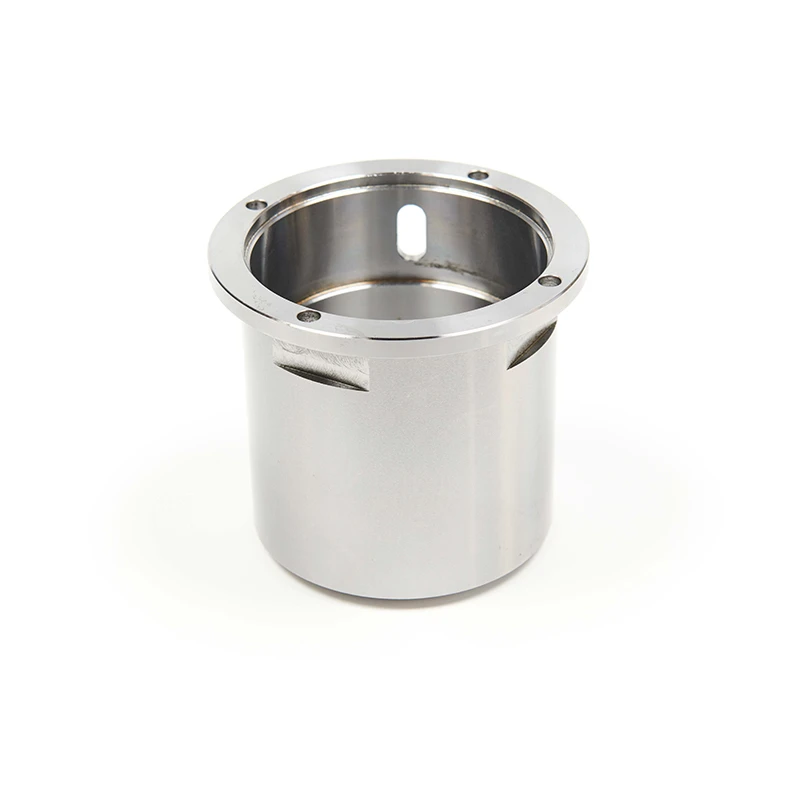

In the high - end manufacturing industry, such as semiconductor manufacturing, ultra - high precision and contamination control are essential. Shaft sleeves used in semiconductor manufacturing equipment must be free from any particles or contaminants that could affect the manufacturing process.
Conclusion
Selecting a shaft sleeve for high - precision applications is a complex process that involves careful consideration of material, dimensional accuracy, surface finish, tolerance, clearance, lubrication, and application - specific requirements. As a shaft sleeve supplier, we are committed to providing high - quality shaft sleeves that meet the most demanding requirements of our customers.
If you are in the market for a shaft sleeve for a high - precision application, we invite you to explore our product range. You can find more information about our Shaft Sleeve on our website. We also offer other related products such as Operating Box Rotary Sleeve and Welding Bracket.
We are always ready to assist you in making the right choice. Please feel free to contact us for more details and to start a procurement discussion. We look forward to serving you and helping you achieve the best performance in your high - precision applications.
References
- Budynas, R. G., & Nisbett, J. K. (2011). Shigley's Mechanical Engineering Design. McGraw - Hill.
- Spotts, M. F., Shoup, T. E., & Hamrock, B. J. (2004). Design of Machine Elements. Prentice Hall.
- Errichello, R. (2015). Precision Machine Design. CRC Press.