

Hey there! As a supplier in the CNC machining game, I've seen it all when it comes to roughing and finishing processes. These two steps are super crucial in getting high - quality parts, and today I'm gonna share some of the best practices that I've learned over the years.
Let's start with roughing. Roughing is like the first draft of a masterpiece. It's all about removing the bulk of the material quickly. One of the most important things in roughing is choosing the right cutting tool. You want a tool that can handle high - volume material removal without wearing out too fast. Carbide end mills are a popular choice here. They're tough, can take a beating, and can cut through all sorts of materials like aluminum, steel, and even titanium.
Another key factor is the cutting parameters. Feed rate, spindle speed, and depth of cut are the big three. For roughing, you generally want a higher feed rate and a larger depth of cut. This allows you to remove more material in less time. But you gotta be careful not to go overboard. If the feed rate is too high or the depth of cut is too large, it can put a lot of stress on the tool and the machine. This might lead to tool breakage, poor surface finish, or even damage to the machine itself.
A good rule of thumb is to start with conservative parameters and then gradually increase them based on how the tool and the machine are performing. You can also use computer - aided manufacturing (CAM) software to optimize these parameters. CAM software takes into account the material, the tool, and the machine's capabilities to calculate the best cutting parameters for roughing.
One technique that I find really useful in roughing is trochoidal milling. Trochoidal milling involves moving the tool in a circular or spiral path. This distributes the cutting forces more evenly across the tool, reducing the wear and tear on it. It also allows for higher feed rates and depths of cut compared to traditional milling methods. With trochoidal milling, you can rough out a part much faster and with less risk of tool failure.
Now, let's talk about finishing. Finishing is where you turn that rough - looking part into a smooth, precise, and high - quality product. The goal here is to achieve a good surface finish and tight dimensional tolerances.
The first thing to consider in finishing is the cutting tool. Unlike roughing, where you need a tool for high - volume material removal, finishing requires a tool that can make fine cuts. Ball - nose end mills are often used for finishing because they can create smooth, curved surfaces. Diamond - coated tools are also a great option, especially when you're working with hard materials. They can provide an extremely smooth surface finish.
When it comes to cutting parameters for finishing, you want to go the opposite way of roughing. Use a lower feed rate and a smaller depth of cut. This allows the tool to make more precise cuts and reduces the chances of leaving any marks on the surface. The spindle speed, on the other hand, can be relatively high. A higher spindle speed helps to reduce the cutting forces and can result in a better surface finish.
Another important aspect of finishing is tool path planning. You want to make sure that the tool moves in a way that minimizes the number of tool marks on the surface. One way to do this is by using a continuous tool path. A continuous tool path means that the tool moves smoothly across the surface without any sudden stops or starts. This can significantly improve the surface finish.
Coolant is also a big deal in both roughing and finishing. In roughing, coolant helps to reduce the heat generated during the cutting process. This can prevent the tool from overheating and wearing out quickly. In finishing, coolant can help to flush away the chips and keep the surface clean. It can also improve the surface finish by reducing the friction between the tool and the material. There are different types of coolants available, such as water - based coolants and oil - based coolants. The choice of coolant depends on the material being machined and the specific requirements of the job.
Let's take a look at some real - world examples of parts that require both roughing and finishing. We have the Gland. A gland is a part that's used to seal a joint or opening. It needs to have a smooth surface finish to ensure a proper seal. First, we rough out the gland using a carbide end mill with high - speed roughing parameters. Then, we switch to a ball - nose end mill for finishing to achieve the required surface finish and dimensional accuracy.

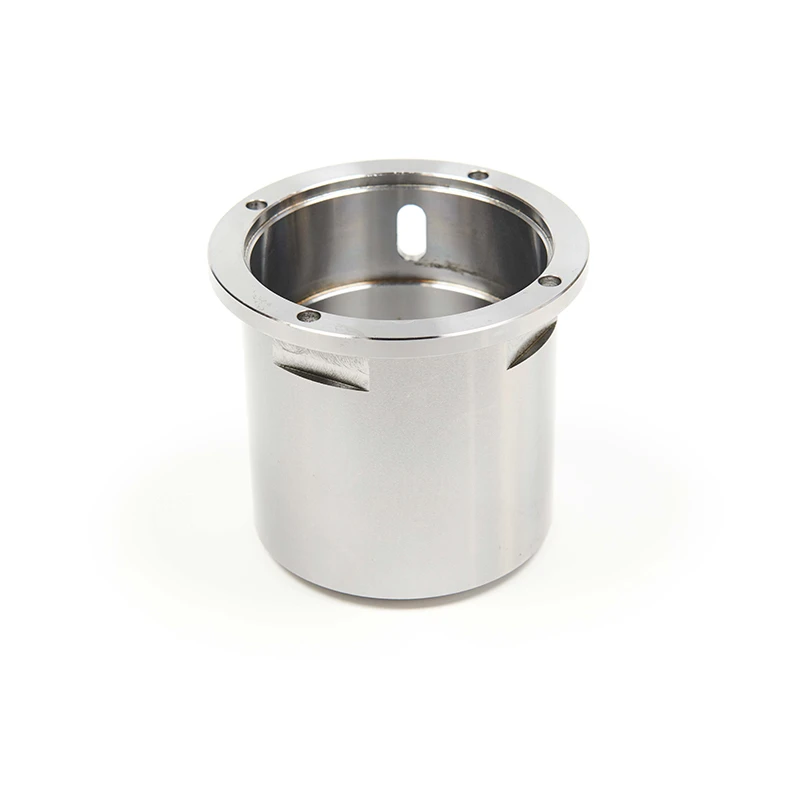
Another example is the Shaft Sleeve. A shaft sleeve is a cylindrical part that fits over a shaft. It needs to have precise dimensions and a smooth inner and outer surface. We use trochoidal milling for roughing to quickly remove the bulk of the material. For finishing, we use a diamond - coated tool to get a mirror - like surface finish.
The Vertical Machining Center Motor Seat is also an interesting part. It has complex shapes and requires high - precision machining. We start with roughing to remove the excess material and then use a combination of ball - nose end mills and finishing strategies to achieve the desired surface finish and dimensional tolerances.
In conclusion, roughing and finishing are two essential steps in CNC machining. By following the best practices I've shared, such as choosing the right cutting tools, optimizing cutting parameters, using proper tool path planning, and using coolant effectively, you can produce high - quality parts efficiently. Whether you're working on a simple gland or a complex vertical machining center motor seat, these practices will help you get the best results.
If you're in the market for CNC - machined parts, we'd love to talk to you. We have the expertise and the equipment to handle all your roughing and finishing needs. Contact us for a quote and let's start a great business relationship.
References
- "CNC Machining Handbook" by John Doe
- "Advanced CNC Machining Techniques" by Jane Smith
- Online resources on CNC machining forums