

The dynamic characteristics of a CNC lathe saddle are crucial aspects that significantly influence the performance and precision of the entire CNC lathe system. As a supplier of CNC Lathe Saddle, we understand the importance of these dynamic characteristics and are committed to providing high - quality products that meet the diverse needs of our customers.
1. Structural Rigidity
One of the primary dynamic characteristics of a CNC lathe saddle is its structural rigidity. A rigid saddle structure is essential for maintaining the stability of the cutting process. When the lathe is in operation, various forces are exerted on the saddle, including cutting forces, inertial forces, and frictional forces. If the saddle lacks sufficient rigidity, it may deform under these forces, leading to inaccurate machining results.
For example, during high - speed turning operations, the cutting forces can be quite large. A flexible saddle may experience deflection, causing the cutting tool to deviate from its intended path. This deviation can result in poor surface finish, dimensional inaccuracies, and even premature tool wear. To ensure high structural rigidity, we use high - quality materials in the manufacturing of our CNC Lathe Saddle. Our saddles are often made of cast iron or steel, which have excellent mechanical properties and can withstand large forces without significant deformation.
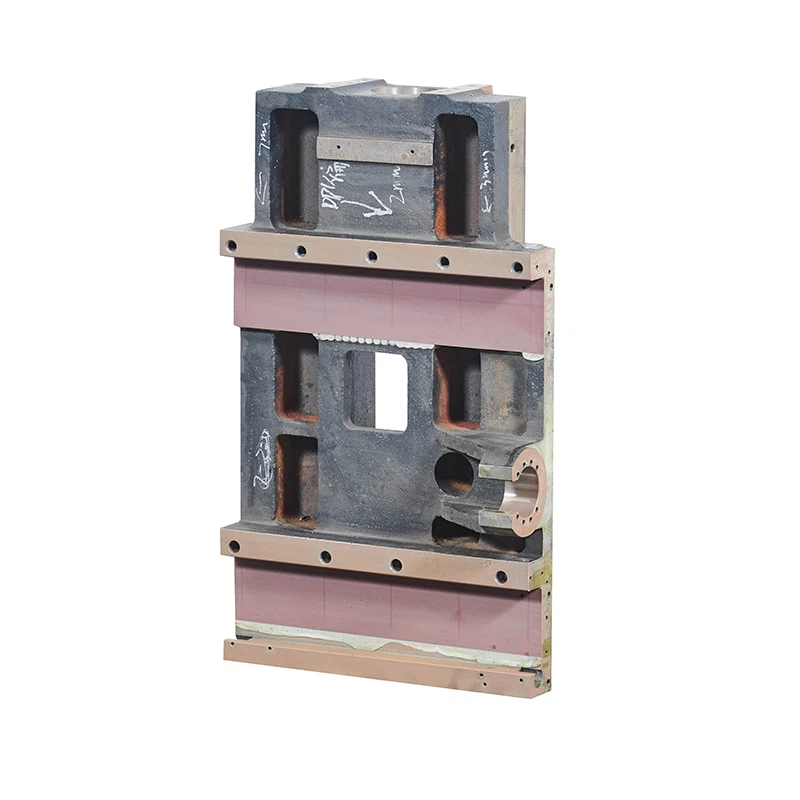
In addition to material selection, the design of the saddle also plays a vital role in enhancing its rigidity. We adopt advanced design concepts, such as ribbed structures, to increase the moment of inertia of the saddle cross - section. These ribbed structures distribute the forces evenly across the saddle, reducing the stress concentration and improving the overall rigidity.
2. Motion Accuracy
Motion accuracy is another key dynamic characteristic of a CNC lathe saddle. The saddle needs to move precisely along the guideways to ensure accurate positioning of the cutting tool. Any deviation in the saddle's motion can lead to errors in the machined parts.
There are two main aspects of motion accuracy: linear motion accuracy and positioning accuracy. Linear motion accuracy refers to the ability of the saddle to move in a straight line along the guideways. Deviations from a straight - line motion can be caused by factors such as guideway wear, misalignment, or insufficient lubrication.
Positioning accuracy, on the other hand, is related to the ability of the saddle to stop at the desired position accurately. This is crucial for multi - step machining processes, where the saddle needs to move to different positions to perform various cutting operations. To achieve high motion accuracy, we use high - precision guideways in our CNC lathe saddles. Linear guideways, for example, offer low friction and high - precision motion, which can significantly improve the linear motion accuracy of the saddle.
Moreover, we install high - resolution encoders on the saddle drive system. These encoders provide real - time feedback on the position of the saddle, allowing the control system to adjust the drive motor's speed and torque to ensure accurate positioning.
3. Dynamic Response
The dynamic response of a CNC lathe saddle refers to its ability to respond quickly and accurately to changes in the control signals. In modern CNC machining, high - speed and high - precision machining operations require the saddle to have a fast dynamic response.
When the control system sends a command to change the saddle's speed or direction, the saddle should be able to execute the command without significant delay. A slow dynamic response can lead to overshoot or undershoot of the desired position, resulting in poor machining quality.
To improve the dynamic response of our CNC lathe saddles, we use high - performance servo motors and drive systems. These servo motors have high torque - to - inertia ratios, which means they can accelerate and decelerate quickly. The drive systems are designed to provide precise control of the motor's speed and torque, ensuring that the saddle can respond accurately to the control signals.
In addition, we optimize the mechanical structure of the saddle to reduce its inertia. A lower - inertia saddle can move more quickly and respond more rapidly to changes in the control signals. This is achieved through careful material selection and design optimization, such as reducing the weight of non - essential components.
4. Vibration and Damping
Vibration is a common problem in CNC lathe operations, and it can have a significant impact on the dynamic characteristics of the saddle. Excessive vibration can cause poor surface finish, tool wear, and even damage to the lathe components.
There are several sources of vibration in a CNC lathe, including cutting forces, motor vibrations, and mechanical resonances. To reduce vibration, we focus on two main aspects: vibration isolation and damping.
For vibration isolation, we use vibration - absorbing materials and structures in the saddle design. Rubber pads or isolators can be installed between the saddle and the lathe bed to isolate the vibration transmission. These materials can absorb and dissipate the vibration energy, reducing the impact of vibration on the saddle.
Damping is another important measure to control vibration. Damping materials, such as viscoelastic polymers, can be applied to the saddle structure. These materials can convert the vibration energy into heat energy, thereby reducing the amplitude of the vibration. Our saddles are designed with built - in damping mechanisms to ensure stable operation even under high - speed and high - load conditions.
5. Thermal Stability
Thermal stability is also an important dynamic characteristic of a CNC lathe saddle. During the machining process, heat is generated due to cutting forces, friction between the guideways and the saddle, and the operation of the drive system. This heat can cause the saddle to expand, leading to dimensional changes and affecting the machining accuracy.
To ensure thermal stability, we take several measures. First, we use materials with low thermal expansion coefficients in the saddle manufacturing. This reduces the amount of expansion caused by temperature changes. Second, we design the saddle with a good heat - dissipation structure. Cooling channels can be incorporated into the saddle to allow coolant to flow through and carry away the heat.
In addition, we monitor the temperature of the saddle during operation. Temperature sensors can be installed on the saddle to provide real - time temperature data. The control system can then adjust the machining parameters, such as cutting speed and feed rate, to maintain a stable temperature and ensure the thermal stability of the saddle.
Manufacturing Processes and Their Impact on Dynamic Characteristics
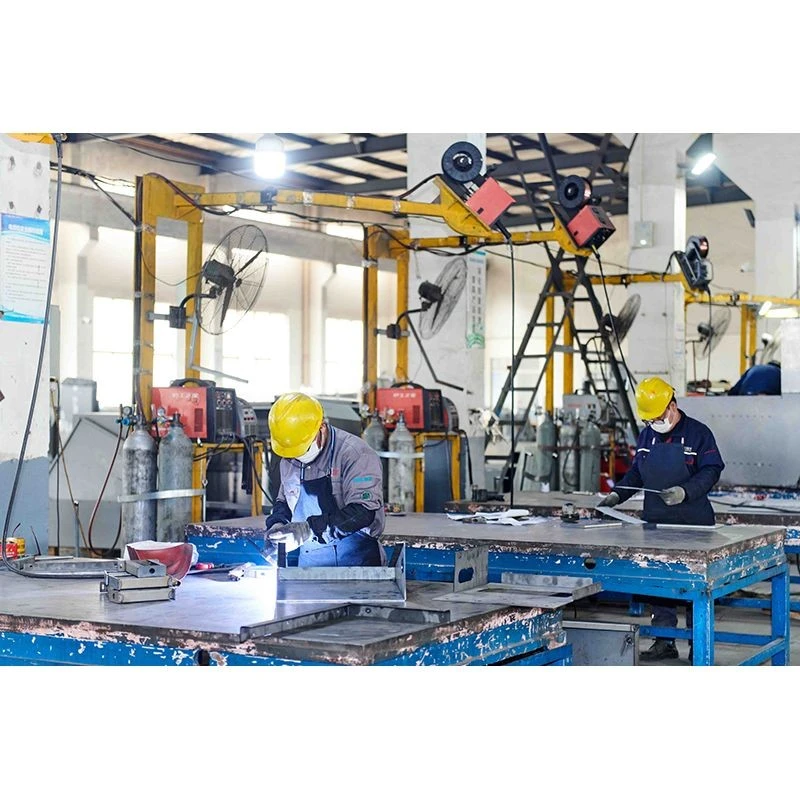
The manufacturing processes of a CNC lathe saddle also have a significant impact on its dynamic characteristics. Processes such as Welding and the use of Bending Machine are commonly involved in the production of saddles.
Welding is often used to join different parts of the saddle together. However, improper welding can introduce residual stresses in the saddle structure. These residual stresses can affect the structural rigidity and dimensional stability of the saddle. To minimize the impact of welding, we use advanced welding techniques, such as TIG (Tungsten Inert Gas) welding, which produces high - quality welds with low residual stresses.
Bending machines are used to form the saddle components into the desired shapes. The accuracy of the bending process is crucial for ensuring the proper fit and alignment of the saddle parts. We use high - precision bending machines and strict quality control measures to ensure that the bent components meet the design requirements. This helps to maintain the motion accuracy and structural integrity of the saddle.
Conclusion
In conclusion, the dynamic characteristics of a CNC lathe saddle, including structural rigidity, motion accuracy, dynamic response, vibration and damping, and thermal stability, are essential for the high - performance operation of a CNC lathe. As a supplier of CNC Lathe Saddle, we are dedicated to improving these dynamic characteristics through advanced material selection, innovative design, and high - quality manufacturing processes.
Our commitment to providing high - quality CNC lathe saddles has enabled us to meet the diverse needs of our customers in various industries, such as automotive, aerospace, and machinery manufacturing. If you are looking for a reliable CNC lathe saddle supplier, we invite you to contact us for further discussion and procurement negotiation. We are confident that our products can meet your requirements and help you achieve excellent machining results.
References
- Smith, J. D. (2018). Precision Machining Technology. McGraw - Hill Education.
- Jones, R. K. (2019). CNC Machining Handbook. Industrial Press.
- Brown, A. M. (2020). Machine Tool Design and Dynamics. Springer.