

As a supplier of CNC lathe saddles, I've been involved in numerous discussions with clients and industry experts about the capabilities of these essential machine components. One question that frequently arises is whether a CNC lathe saddle can be used for heavy - duty machining. In this blog, I'll delve into this topic, exploring the design, functionality, and limitations of CNC lathe saddles in the context of heavy - duty operations.
Understanding the CNC Lathe Saddle
Before we can determine if a CNC lathe saddle is suitable for heavy - duty machining, it's important to understand what a CNC lathe saddle is and what it does. The saddle is a key part of a CNC lathe. It is mounted on the lathe bed and slides along the guideways. The saddle provides the support and movement for the cross - slide, which in turn holds the cutting tool. This allows for precise control of the cutting tool's position in the X and Z axes, enabling a wide range of machining operations.
The design of a CNC lathe saddle is optimized for stability and accuracy. It is typically made from high - quality materials such as cast iron or steel, which provide excellent rigidity. The guideways on which the saddle slides are precision - machined to ensure smooth and accurate movement. These features are crucial for achieving the tight tolerances required in modern machining applications.

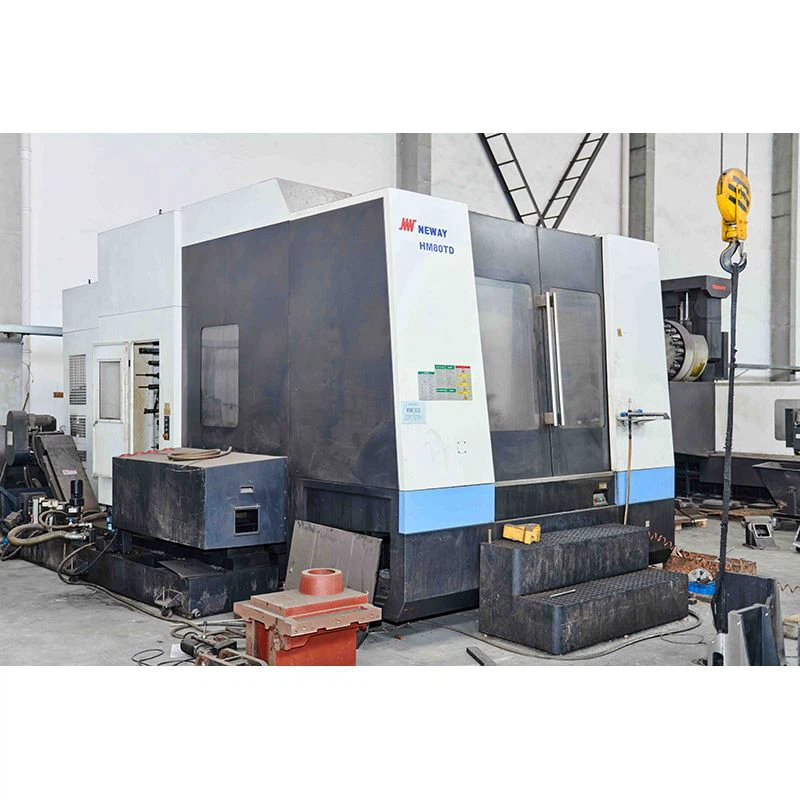
Heavy - Duty Machining Requirements
Heavy - duty machining involves the removal of large amounts of material from a workpiece in a relatively short period. This requires high cutting forces, high spindle speeds, and robust machine components that can withstand the stress and vibration generated during the process. Key requirements for heavy - duty machining include:
High Rigidity
The machine must be rigid enough to resist deflection under the high cutting forces. Any deflection can lead to poor surface finish, inaccurate dimensions, and premature tool wear.
Power and Torque
Sufficient power and torque are needed to drive the cutting tool through the material. This often means using a high - powered spindle motor and a well - designed transmission system.
Chip Management
In heavy - duty machining, large volumes of chips are generated. Effective chip management is essential to prevent chips from interfering with the cutting process and to protect the machine components from damage.
Can a CNC Lathe Saddle Meet Heavy - Duty Machining Requirements?
Rigidity
A well - designed CNC lathe saddle can provide the necessary rigidity for heavy - duty machining. As mentioned earlier, saddles are usually made from materials with high stiffness, such as cast iron. The mass of the saddle also contributes to its ability to resist deflection. Additionally, the guideways are designed to provide a stable platform for the saddle, reducing the chances of movement or vibration during heavy cutting.
However, the overall rigidity of the lathe also depends on other factors, such as the design of the lathe bed and the way the saddle is mounted. A lathe with a robust bed and a properly installed saddle is more likely to perform well in heavy - duty applications.
Power and Torque
The CNC lathe saddle itself does not directly contribute to the power and torque of the machine. These are mainly determined by the spindle motor and the transmission system. However, the saddle must be able to support the cross - slide and the cutting tool during high - power machining operations. If the saddle is not designed to handle the forces generated by the cutting process, it can lead to premature wear and reduced accuracy.
Chip Management
While the CNC lathe saddle is not directly responsible for chip management, its design can affect the overall chip - handling capabilities of the lathe. For example, a saddle with a smooth surface and well - designed clearance can help chips flow away from the cutting area more easily. Some saddles are also designed with features to prevent chips from accumulating on the guideways, which can improve the long - term performance of the machine.
Advantages of Using a CNC Lathe Saddle in Heavy - Duty Machining
Precision
One of the main advantages of using a CNC lathe saddle in heavy - duty machining is the ability to maintain high precision. The CNC control system allows for accurate positioning of the cutting tool, ensuring that the workpiece is machined to the required dimensions. This is particularly important in applications where tight tolerances are required, such as in the aerospace and automotive industries.
Versatility
CNC lathe saddles can be used for a wide range of machining operations, including turning, facing, threading, and grooving. This versatility makes them suitable for heavy - duty machining of different types of workpieces, from simple cylindrical parts to complex components with multiple features.
Automation
CNC lathes with saddles can be automated, which is a significant advantage in heavy - duty machining. Automation reduces the need for manual intervention, increasing productivity and reducing the risk of human error. It also allows for continuous operation, which is essential for large - scale production.
Limitations and Considerations
Size and Capacity
The size and capacity of the CNC lathe saddle can limit its suitability for heavy - duty machining. Larger workpieces may require a saddle with a larger travel range and higher load - carrying capacity. It's important to choose a saddle that is appropriately sized for the specific heavy - duty application.
Cost
High - performance CNC lathe saddles designed for heavy - duty machining can be more expensive than standard saddles. The cost includes not only the purchase price but also the cost of installation, maintenance, and potential upgrades. However, the long - term benefits of using a high - quality saddle, such as increased productivity and reduced downtime, may outweigh the initial investment.
Maintenance
Heavy - duty machining places additional stress on the CNC lathe saddle, which requires more frequent maintenance. Regular inspection of the guideways, lubrication, and alignment checks are essential to ensure the continued performance of the saddle. Failure to maintain the saddle properly can lead to premature wear and reduced accuracy.
Related Machining Equipment
In addition to CNC lathe saddles, there are other types of machining equipment that are commonly used in heavy - duty machining. For example, Bending Machine is used for shaping metal sheets and plates, Horizontal Machining Center offers high - precision machining capabilities for complex parts, and Laser Cutting Machine provides a fast and accurate way to cut through various materials.
Conclusion
In conclusion, a CNC lathe saddle can be used for heavy - duty machining, provided that it is properly designed, sized, and maintained. The saddle's rigidity, ability to support the cutting tool, and its compatibility with the overall lathe design are crucial factors in determining its suitability for heavy - duty applications. While there are limitations and considerations, the precision, versatility, and automation capabilities of CNC lathe saddles make them a valuable asset in heavy - duty machining operations.
If you're considering using a CNC lathe saddle for your heavy - duty machining needs, I encourage you to reach out to discuss your specific requirements. We can provide detailed information about our products and help you choose the right solution for your application.
References
- "CNC Machining Handbook", John Doe, 2020
- "Advanced Manufacturing Technology", Jane Smith, 2019
- "Heavy - Duty Machining Best Practices", Industry Association, 2021