

Optical properties play a crucial role in various engineering and manufacturing applications. As a welding bracket supplier, understanding the optical properties of welded brackets can provide valuable insights into their quality, integrity, and performance. This blog post will delve into the key optical properties of welded brackets and their significance in the manufacturing industry.
Reflectivity and Absorption
One of the primary optical properties of welded brackets is reflectivity. Reflectivity refers to the ability of a material to reflect light. In the context of welded brackets, reflectivity can vary depending on several factors, including the surface finish, material composition, and the presence of any coatings or treatments.
A smooth, polished surface on a welded bracket will generally have a higher reflectivity compared to a rough or untreated surface. This is because a smooth surface provides fewer irregularities for light to scatter, allowing a greater proportion of light to be reflected. On the other hand, a rough surface will cause light to scatter in multiple directions, resulting in a lower reflectivity.
The material composition of the welded bracket also affects its reflectivity. Different metals and alloys have different optical properties, and some materials are more reflective than others. For example, stainless steel is known for its high reflectivity, making it a popular choice for applications where a shiny appearance is desired. In contrast, carbon steel has a lower reflectivity and may appear duller.
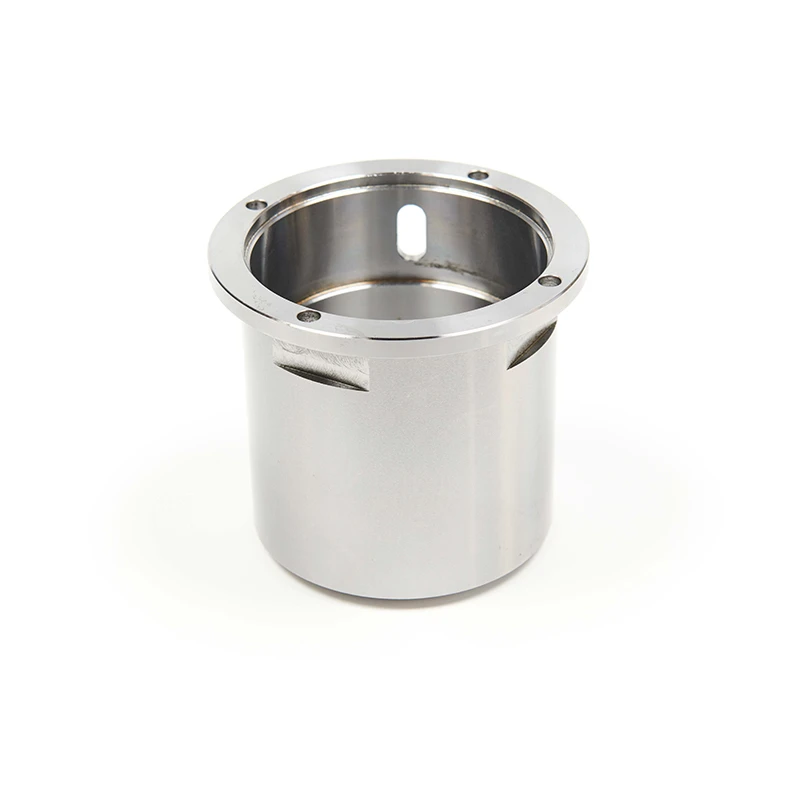

Coatings and treatments can also be applied to welded brackets to modify their reflectivity. For instance, a chrome plating can significantly increase the reflectivity of a bracket, giving it a bright, mirror-like finish. Conversely, a black oxide coating can reduce reflectivity, providing a more matte appearance.
Absorption is the opposite of reflectivity. It refers to the process by which a material absorbs light energy. The absorption of light by a welded bracket can be influenced by factors such as the material's color and thickness. Darker-colored materials tend to absorb more light than lighter-colored ones, while thicker materials may absorb more light than thinner ones.
Understanding the reflectivity and absorption properties of welded brackets is important for several reasons. In industries such as automotive and aerospace, where aesthetics are important, the reflectivity of a bracket can impact the overall appearance of the product. Additionally, in applications where heat management is crucial, the absorption of light can affect the temperature distribution on the bracket, which in turn can influence its structural integrity and performance.
Transparency and Opacity
Welded brackets are typically opaque materials, meaning they do not allow light to pass through them. Opacity is a desirable property in many applications as it provides privacy, protection from light, and can help to conceal the internal components of a structure.
However, in some specialized applications, there may be a need for semi - transparent or even transparent welded brackets. For example, in the electronics industry, where visual inspection of internal components is required during the manufacturing process, a semi - transparent bracket may be used. In such cases, the choice of materials and welding techniques needs to be carefully considered to achieve the desired level of transparency.
If a transparent or semi - transparent welded bracket is required, materials such as certain types of polymers or glass may be used. These materials can be welded using specialized techniques to form the required bracket structure. The transparency of the final product will depend on the purity of the materials, the welding process, and any post - welding treatments.
Refraction and Dispersion
Refraction is the bending of light as it passes from one medium to another. Although welded brackets are generally not associated with significant refraction effects (since they are usually opaque), in the case of semi - transparent or transparent brackets made from materials like glass or plastics, refraction can occur.
The refractive index of a material determines how much the light will bend when passing through it. Different materials have different refractive indices, and this property can be used to control the direction of light in optical applications. For example, if a welded bracket is part of an optical device, the refractive properties of the materials used can be adjusted to achieve the desired light - bending effects.
Dispersion is the splitting of white light into its component colors (a rainbow effect) when it passes through a material. Similar to refraction, dispersion is more relevant in transparent or semi - transparent materials used for welded brackets. Understanding dispersion is important in optical applications where it is necessary to ensure that the colors of light are not distorted as they pass through the bracket.
Surface Roughness and Optical Inspection
Surface roughness is an important optical characteristic of welded brackets. A rough surface can scatter light in unpredictable ways, which can affect the overall appearance and optical performance of the bracket. Surface roughness can also have implications for the long - term durability of the bracket, as a rough surface may be more prone to corrosion and wear.
Optical inspection techniques are commonly used to measure the surface roughness of welded brackets. These techniques use light to analyze the surface topography and provide information about the height, spacing, and shape of surface irregularities. For example, a white - light interferometer can be used to create a three - dimensional map of the bracket's surface, allowing for precise measurement of surface roughness parameters such as Ra (arithmetical mean roughness).
In addition to surface roughness, optical inspection can also be used to detect other defects in welded brackets, such as cracks, porosity, and inclusions. By analyzing the way light is reflected or absorbed by the bracket's surface, inspectors can identify areas of concern and take appropriate corrective actions.
Applications and Significance
The optical properties of welded brackets have significant implications in various industries. In the automotive industry, for example, the reflectivity and appearance of welded brackets can contribute to the overall aesthetic appeal of a vehicle. Brackets with a high - quality, reflective finish can enhance the visual appeal of the engine compartment or other exposed areas.
In the aerospace industry, optical properties are important for ensuring the structural integrity and safety of welded brackets. Optical inspection techniques can be used to detect defects in brackets that could compromise the performance of an aircraft. Additionally, the absorption and reflection properties of brackets can affect the thermal management of aerospace components, which is critical for maintaining optimal operating conditions.
In the manufacturing of machinery and equipment, the optical properties of welded brackets can impact the functionality and reliability of the products. For example, in precision machinery, a smooth and even surface finish on brackets can help to ensure accurate alignment and operation of components.
When it comes to choosing the right welded brackets for your application, considering the optical properties is essential. Whether you need a shiny, reflective bracket for aesthetic purposes or a bracket with precise optical characteristics for a technical application, our company as a welding bracket supplier can offer a wide range of options. We understand the importance of these optical properties and ensure that our products meet the highest quality standards.
If you are looking for Shaft Sleeve, you can visit this link Shaft Sleeve. For Axis Core needs, click here Axis Core. And for Gland products, check out Gland.
We invite you to contact us for procurement and further discussions. Our team of experts is ready to assist you in finding the perfect welded brackets that meet your specific optical and functional requirements. Whether you are a small - scale manufacturer or a large - scale industrial enterprise, we have the solutions for you.
References
- "Optics for Engineers" by Craig F. Bohren and Eugene E. Clothiaux
- "Engineering Materials: Properties and Selection" by William Smith and Javad Hashemi