

When it comes to TIG (Tungsten Inert Gas) welding, selecting the best shielding gas is a critical decision that can significantly impact the quality, efficiency, and overall success of your welding projects. As a trusted welding supplier, we understand the importance of this choice and are here to guide you through the various options available.
Understanding the Role of Shielding Gas in TIG Welding
Shielding gas plays a vital role in TIG welding by protecting the weld pool and the tungsten electrode from atmospheric contamination. When the arc is struck during TIG welding, the high temperatures cause the metal in the weld pool to become highly reactive. If exposed to oxygen, nitrogen, and hydrogen in the air, the weld can suffer from porosity, oxidation, and other defects that compromise its strength and integrity.
A proper shielding gas creates a protective barrier around the weld area, preventing the entry of these harmful gases and ensuring a clean, high - quality weld. Different shielding gases offer different properties, and the choice depends on several factors, including the type of metal being welded, the thickness of the material, and the desired weld characteristics.
Common Shielding Gases for TIG Welding
Argon
Argon is the most commonly used shielding gas for TIG welding. It is an inert gas, which means it does not react with the metal being welded. Argon provides excellent arc stability, making it ideal for a wide range of metals, including stainless steel, aluminum, and copper.
-
Benefits:
- Arc Stability: Argon produces a smooth, stable arc, which is essential for precise control during TIG welding. This stability allows for better bead formation and reduces the likelihood of spatter.
- Clean Welds: Since argon is inert, it does not introduce any contaminants into the weld pool, resulting in clean, high - quality welds with excellent corrosion resistance.
- Versatility: It can be used for both thin and thick materials, making it a go - to choice for many welding applications.
-
Limitations:
- Low Heat Transfer: Argon has relatively low heat transfer properties, which can make it less effective for welding thick materials. In some cases, additional heat may be required to achieve proper fusion.
Helium
Helium is another inert gas used in TIG welding. It has a higher heat - carrying capacity than argon, which means it can transfer more heat to the weld pool.
-
Benefits:
- High Heat Input: Helium's high heat - carrying capacity allows for faster welding speeds and deeper penetration, making it suitable for welding thick materials. It can also be used to improve the welding of metals with high thermal conductivity, such as aluminum.
- Increased Weld Speed: The higher heat input enables faster travel speeds, increasing productivity in welding operations.
-
Limitations:
- Cost: Helium is more expensive than argon, which can increase the overall cost of the welding process.
- Arc Control: Helium can make the arc more diffuse and less stable compared to argon, which may require more skill and experience to control.
Argon - Helium Mixtures
Combining argon and helium can offer the best of both worlds. These mixtures are tailored to take advantage of argon's arc stability and helium's high heat - carrying capacity.

-
Benefits:
- Optimal Weld Characteristics: By adjusting the ratio of argon to helium, welders can achieve a balance between arc stability and heat input, resulting in high - quality welds with good penetration and bead appearance.
- Versatility: Argon - helium mixtures can be used for a variety of metals and thicknesses, providing a flexible solution for different welding applications.
-
Limitations:
- Cost and Complexity: Mixing gases adds an extra level of complexity to the welding process, and the cost may be higher compared to using a single gas.
Argon - Hydrogen Mixtures
For welding certain metals, such as stainless steel, argon - hydrogen mixtures can be used. Hydrogen has a reducing effect, which can help to remove oxides from the weld surface.
-
Benefits:
- Reduced Oxidation: The hydrogen in the mixture helps to reduce oxidation on the weld surface, resulting in a cleaner, brighter weld.
- Improved Weld Quality: This can lead to better corrosion resistance and mechanical properties of the weld.
-
Limitations:
- Safety Concerns: Hydrogen is a flammable gas, which requires careful handling and storage. Special safety precautions must be taken when using argon - hydrogen mixtures.
- Limited Applications: These mixtures are mainly used for specific metals and may not be suitable for all welding applications.
Factors to Consider When Choosing a Shielding Gas
Type of Metal
Different metals have different welding requirements, and the choice of shielding gas should be based on the metal being welded. For example:
- Aluminum: Aluminum is highly reactive and requires a shielding gas that can prevent oxidation. Argon or argon - helium mixtures are commonly used for aluminum TIG welding. The high heat - carrying capacity of helium can be beneficial for welding thick aluminum sections.
- Stainless Steel: Argon is the primary shielding gas for stainless steel welding. However, argon - hydrogen mixtures can be used to improve the weld quality by reducing oxidation and achieving a smoother bead appearance.
- Copper: Copper has high thermal conductivity, so helium or argon - helium mixtures are often used to provide enough heat for proper fusion.
Material Thickness
Thicker materials generally require more heat input to achieve proper fusion. Helium or argon - helium mixtures are better suited for welding thick materials due to their higher heat - carrying capacity. For thin materials, argon is usually sufficient as it provides good arc stability without overheating the material.
Weld Quality Requirements
If high - quality, clean welds with excellent corrosion resistance are required, argon or argon - based mixtures are a good choice. For applications where speed and penetration are more important, helium or argon - helium mixtures may be preferred.
Our Welding Solutions
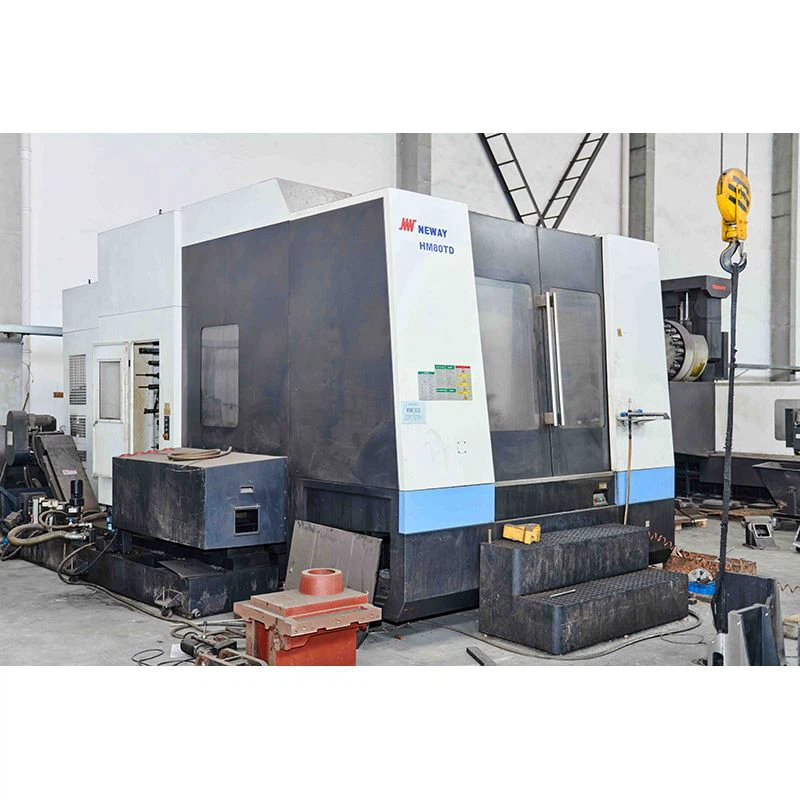
As a leading welding supplier, we offer a wide range of shielding gases and welding equipment to meet your specific needs. In addition to high - quality gases, we also provide advanced welding machines and tools. For example, our Precision Pipe Cutting Machine Base is designed for precise pipe cutting, ensuring accurate and clean cuts for your welding projects. Our Horizontal Machining Center offers high - precision machining capabilities, which can be used to prepare the workpieces before welding. And our Bending Machine is perfect for shaping metal parts to the desired form.
Contact Us for Your Welding Needs
Choosing the right shielding gas is just one aspect of a successful welding project. Our team of experts is here to provide you with professional advice and support. Whether you are a small - scale workshop or a large - scale manufacturing facility, we can help you find the best solutions for your welding requirements.
If you are interested in our products or have any questions about TIG welding and shielding gases, please do not hesitate to contact us. We look forward to discussing your needs and working with you to achieve outstanding welding results.
References
- Welding Handbook, American Welding Society
- "Shielding Gases for TIG Welding" by various industry experts in welding journals.