


Why Choose Us
Rich Experience
We are committed to the mechanical parts processing market and provide well-known CNC equipment manufacturers and automation companies in South Korea, China and other countries.
Customized Service
Conduct product accuracy analysis based on the drawings provided by the customer, and communicate with the customer about the drawing requirements and product process.
Advanced Equipment
The existing factory building is 5,400 square meters and has more than 30 sets of equipment from well-known manufacturers in South Korea, Taiwan, and China.
After-Sale Service
Professional and thoughtful after -sales team, let you worry about us after -sales Intimate service, strong after -sales team support.
What is Shaft Sleeve
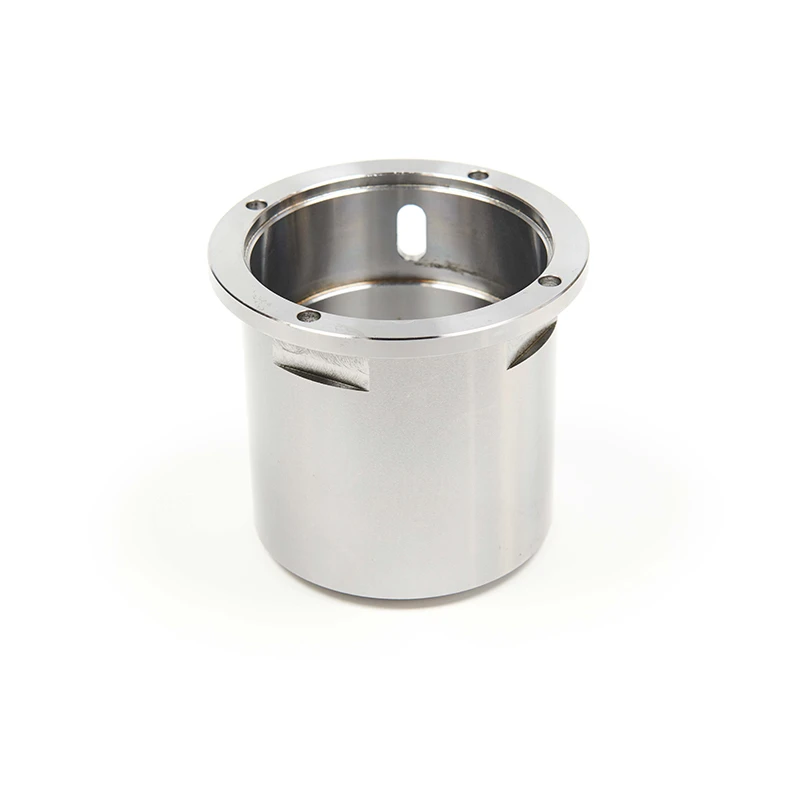
A shaft sleeve is a mechanical component shaped like a cylindrical sleeve installed between a rotating shaft and a bearing. They act as a wear-resistant tool, protecting the shaft surface to allow smooth operation by preventing abrasion, corrosion, and contact with other interior pieces like bearings, seals, and the impeller. When the shaft sleeve is worn, it can be replaced separately rather than replacing the entire shaft, thereby reducing costs. Its smooth and uniform surface lets it fit well with the rotating shaft, enhancing the sealing effect.
Related Product

Confidentiality system (taking confidentiality and security measures for your drawings and personal information)
Measurement equipment (complete mechanical processing equipment)
Price advantage (more affordable compared to accessories of the same level).

This product is mainly formed in one go by a car milling composite machine or completed by a lathe and vertical machining,
The main process route is material - turning and milling center or material - lathe - vertical machining
This product is mainly used for automotive transmissions.

This product is mainly a CNC vertical machining center bearing seat, made of 45 steel. The main process route is material - heat treatment - lathe - vertical machining.
This product injects lubricating oil into the bearing holes through internal penetration to ensure the lubrication effect of the bearings.

Vertical Machining Center Motor Seat
This product is mainly used to connect the transmission device between the screw and the motor, ensuring the rigidity and stability of the product through integrated castings.
Control the accuracy within 0.01mm.

This product is mainly used to fix equipment pipelines such as cooling pipes, hydraulic pipes, etc. The material is nylon 66, and the main process route is material - vertical reinforcement.

This product is mainly installed at the end of the screw and used in conjunction with bearings. The material is 45 steel, and the main process route is material - heat treatment - lathe - grinder
Control the accuracy within 0.01mm.

This product is mainly a CNC horizontal CNC lathe turret accessory and an integrated (HT300) casting. The main process route is casting vertical machining surface treatment
The main function of this product is to clamp the turning tool and play a turning role.

Steering Wheel Motor Accessories
This product is mainly formed in one go by a car milling composite machine
The main process route is materials - turning and milling center
This product is mainly used for automotive steering wheel motors
Send Inquiry

This product is mainly used for cooling workpieces at the spindle end of vertical machining. The material is 45 steel, and the main process route is material vertical machining surface treatment.
Common Shaft Sleeve Materials and Their Advantages
Silicon carbide and alumina
As ceramic materials, silicon carbide, and alumina sleeves boast excellent corrosion resistance. They can also withstand high pressures and temperatures. They are harder and more durable than other materials, suitable for mechanical applications in harsh environments and high-performance requirements.
Carbon graphite
Graphite sleeves are a self-lubricating material that reduces friction and wear. They are also chemically inert and provide corrosion protection. Their strength is less than ceramic materials, but they are suitable for high temperatures or environments where lubricating oil is not allowed.
Zirconia
Zirconia sleeves have high strength. Its toughness is excellent, which can prevent the material from breaking when impacted. In addition, this type of shaft sleeve also has electrical insulation and low thermal conductivity, which will not cause high temperatures during operation and affect performance.
Tungsten carbide
These sleeves are hard alloy and offer great wear resistance. They are hard-wearing but more brittle compared to other options.
When Should the Shaft Sleeve be Replaced?
Wear and aging of shaft sleeves
Over extended periods of use, pump sleeves will experience wear from mechanical friction and contact with other components. Once the wear depth exceeds acceptable limits, it's time for replacement. In addition, if there are obvious cracks and aging deformation on the shaft sleeve, it must be replaced promptly. Therefore, regular inspections are very important.
Corrosion of shaft sleeve
Prolonged corrosive exposure can degrade the shaft sleeve material. For instance, acidic or alkaline fluids can damage sleeve bushings if they are not made of corrosion-resistant materials. The sealing effect will be affected, so it needs to be replaced.
Seal Failure of shaft sleeve
Seals can fail prematurely if the shaft sleeve surface becomes excessively worn, cracked, or pitted from corrosion. This compromises the smooth surface required for a proper seal. The internal medium of the pump may leak, affecting the operation of the machine or causing shutdown.
Excessivevibration of pumps
If the pump vibrates excessively, it may be caused by damage to the shaft sleeve. In this case, the condition of the shaft sleeve should be checked and replaced if necessary. Excessive vibration transferring to the shaft sleeve from the pump can accelerate material fatigue and wear.
Role of Shaft Sleeve
Supporting the load of rotating parts
Shaft sleeve can support the weight of rotating parts and loads, and at the same time share the load of bearings. This not only reduces bearing friction and wear, but also increases bearing life.
Reduces wear and tear
The sleeve is installed between the shaft and the bearing, which reduces the direct contact between the shaft and the bearing, and thus reduces wear.
Prevent foreign matter from intruding
Sleeves can effectively prevent dust, sand and other foreign matter from intruding into the bearings, thus protecting the working surface of the bearings.
Reduce noise and vibration
The shaft sleeve can absorb or disperse the vibration and noise of the rotating parts, thus making the machine work more smoothly and quietly.
The Scope of Use of Shaft Sleeves
Different mechanical equipment need to use different types of shaft sleeves, according to different use scenarios and requirements for selection, generally including the following types:
Sliding shaft sleeves
Sliding shaft sleeves are widely used in mechanical equipment under high speed, high precision, heavy load and shock load conditions.
Rolling shaft sleeve
Rolling shaft sleeve is usually used in low speed, high load, high wear resistance and high stability conditions of mechanical equipment.
Hydraulic shaft sleeve
Hydraulic shaft sleeve is usually applied to the hydraulic mechanical equipment which needs high force and high precision position control.
Shaft Sleeve Are Made of Which Kinds of Materials
Metal materials
Common metal materials include steel and aluminum alloys. These materials are often used to make shaft sleeves because they have good mechanical properties and durability.
Non-metallic materials
These include cast iron, cast bronze, bearing alloys, nylon, polytetrafluoroethylene (PTFE), polyformaldehyde POM, nylon PA, polypropylene PP, etc. These materials are suitable for different working environments and performance requirements. For example, PTFE has excellent corrosion resistance and chemical stability, while nylon has good abrasion and impact resistance.
Precautions for the Use of Shaft Sleeves
Correct selection and use of shaft sleeves: Ensure that the shaft sleeves are compatible with other parts of the machinery and equipment to guarantee normal operation and prolong the service life of the equipment.
Inspection before installation: Before installing the shaft sleeve, the shaft sleeve and its related parts should be carefully inspected for any damages or defects, such as whether the dynamic and static rings are bruised, cracked and deformed. Make sure it is intact.
Keep clean: In the process of installation, the sleeve and its related parts should be kept clean, especially the dynamic and static rings and auxiliary sealing elements, should be free of impurities and dust. And clean it with acetone or anhydrous alcohol before installation.
Proper lubrication: Choose and use lubricant correctly, avoid using too much or too little lubricant, and consider environmental conditions, temperature, speed and load conditions to choose the correct lubricant, filling amount and lubrication method.
Avoid using temperature out of range: Make sure the working temperature of the shaft sleeve is within the design limit temperature range, avoiding the long time working which leads to the reduction of bearing capacity or early failure of the shaft sleeve.
Avoid corrosion: Protect the shaft sleeve from corrosion, especially in humid environments, choose the right material and sealing form to avoid rusting caused by moisture intrusion.
Monitoring and Maintenance: Regularly check the status of the shaft sleeve and note any abnormalities such as noise, vibration or temperature increase, which are possible signs of problems and should be promptly maintained or replaced.
Maintenance of Shaft Sleeve
Regular inspection
The shaft sleeve should be inspected regularly, including checking the clearance between it and the main shaft to ensure that there is no excessive wear or deformation, and any problems found should be dealt with in time.
Maintenance
Keep the shaft sleeve and its surrounding parts clean to avoid the entry of foreign matter leading to wear or corrosion.
Preventing overloading
Avoid working the shaft sleeve under loads exceeding its design to prevent permanent deformation or damage.
Proper Lubrication
Ensure that the shaft sleeve is properly lubricated during operation to minimize friction and wear and prolong service life.
Installation Method of Shaft Sleeve
• Ensure that the surfaces of the shaft and bearing bore are clean and free from all dirt and grease. This can be accomplished through the use of lubricants and cleaners.
• Check that the outer surface of the shaft sleeve is clean and free from any grooves and wear. If necessary, replace the shaft sleeve with a new one.
• Place the bearing on the shaft and in the correct position according to the instruction manual provided by the manufacturer. Ensure that the bearing snaps onto the shaft and is free to rotate.
• Push the shaft sleeve onto the shaft to ensure correct orientation and position. Use a shaft sleeve installation tool or light hammer to gently tap the shaft sleeve until it is fully seated on the shaft.
• During installation, it is better to install it in place at one time with the help of tools to avoid rotating back and forth to damage the sealing surface of the oil seal. Remember not to install it in the reverse direction to avoid damaging the sealing surface and causing oil leakage.
• After installation, check whether the bearing can rotate freely. At the same time, you need to check whether the bearing is correctly assembled and maintain a certain clearance with the tightening sleeve.
Our Factory
Zhangjiagang Xinshuo Machinery Co., Ltd. was established in December 2012. The company is located in Zhangjiagang, Suzhou, a national health city. It is a CNC enterprise integrating R&D, production, sales and service. After years of development, we have an experienced team Our high-level professional technical team owns many high-end brand products from Europe, America, Japan, Korea and Taiwan, and is able to provide our customers with high-quality CNC processing solutions. We are committed to the mechanical parts processing market and provide well-known CNC equipment manufacturers and automation companies in South Korea, China and other countries. Provide precision parts processing and manufacturing.
Xinshuo Machinery is committed to creating maximum value for customers and continuing to innovate. It adheres to the business principle of centering on the core needs of customers and the business philosophy of professionalism, innovation, co-creation and sharing, uses numbers to quantify value, and builds a benchmark in the CNC industry.

FAQ


